Getting Your Alabama Heating Ready Before the First 2026 Cold Snap
Alabama's mild fall is the window to check your furnace or heat pump before winter. What to do this season and when to call a licensed contractor.
Alabama heating season is short, unpredictable, and almost always arrives before anyone is ready for it. September still feels like summer. Then one week in November a front pushes down from Tennessee, the overnight low drops into the 30s, and half the state discovers at 6 AM that the heat does not work.
That is the pattern every year, and it is why fall is the right time to deal with heating. Right now, in the gap between the cooling peak and the first cold snap, contractor schedules have room and parts are available. In the middle of a cold week, both of those things change fast.
Why fall is the window
Your heating equipment has been sitting idle since roughly March. If you have a gas furnace, dust has been settling on the burners and the flame sensor for six months. If you have a heat pump, which most Alabama homes do, the outdoor unit has just finished five months of continuous cooling duty and is about to reverse into heating mode for the first time since spring.
Faults that were invisible at 70 degrees show up at 30. A defrost board that has been marginal all year works fine in mild weather and fails the first time the coil actually needs defrosting. A refrigerant charge that dropped slightly over the summer costs you nothing until the system needs every bit of capacity it has.
Checking in September or October means any problem you find is a scheduled repair. Finding it during the first cold snap means joining a queue with everyone else in your county.
What you can do yourself this month
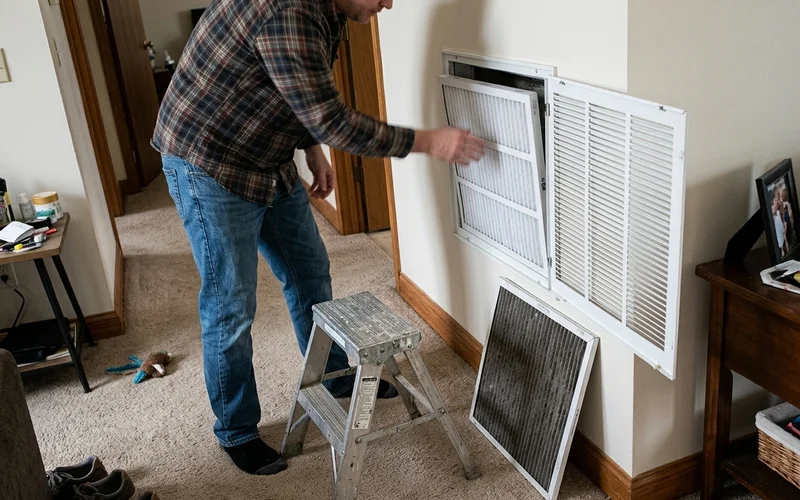
Start with the filter. After a full cooling season, it is almost certainly due, and airflow matters as much for heating as it does for cooling. A choked filter causes a furnace to overheat and trip its limit switch, which is the classic short-cycling complaint.
Then run the heat for fifteen minutes on a mild day. Set the thermostat above the current indoor temperature and let the system start. You are listening and smelling, not judging comfort. A brief dusty burning smell on the first run of the season is normal and passes in a few minutes. A persistent burning smell, booming on ignition, or any sulfur or rotten-egg odor is not normal, if you smell gas, leave the house without touching any switches and call your gas provider or 911 from outside.
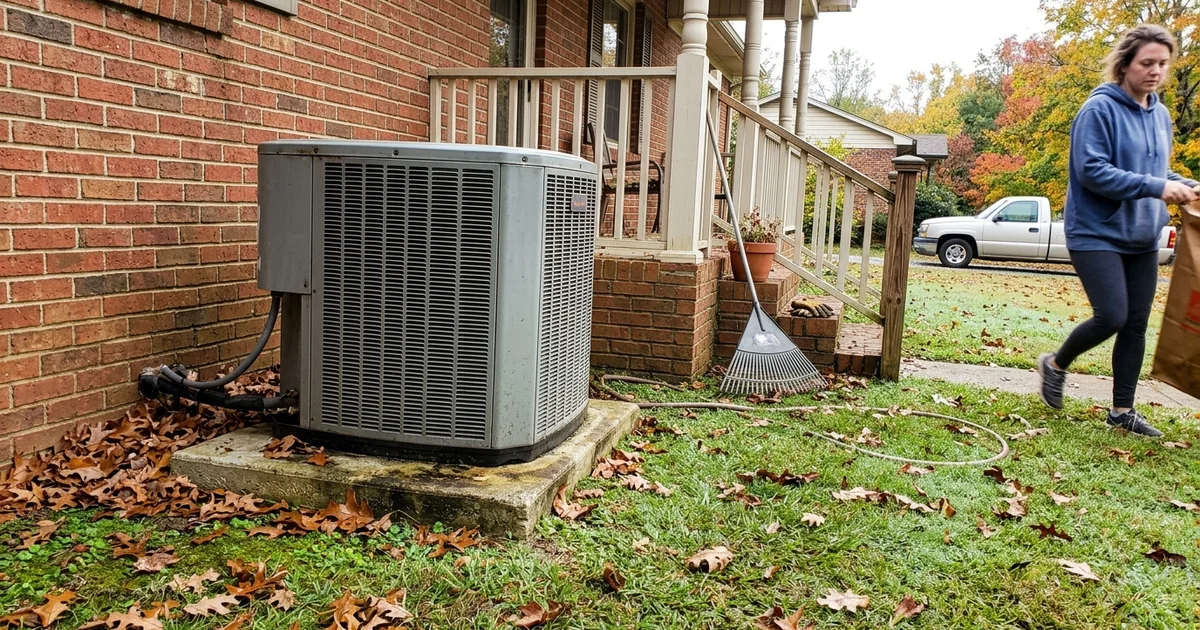
Walk outside and look at the heat pump. Clear leaves, pine straw, and any grass clippings away from the coil, and make sure nothing is stacked against the unit. Give it at least a couple of feet of clearance on every side. If you covered it with anything over the summer, take that off.
Check that your registers are open and unblocked. Furniture that got moved during summer has a way of ending up in front of a supply vent.
Finally, look at your thermostat. If it takes batteries, change them now. If it is a smart thermostat controlling a heat pump, check that the auxiliary heat settings have not drifted, a thermostat that calls electric strips too eagerly will show up on your December power bill in a way you will not enjoy.
What needs a licensed contractor
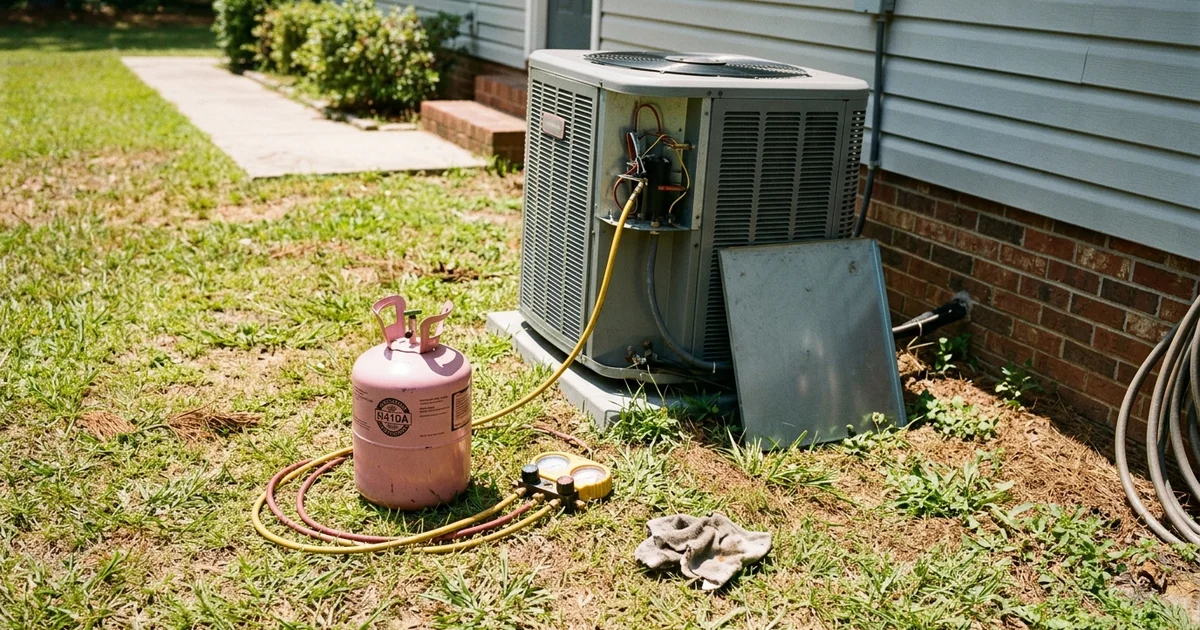
Everything involving gas, combustion, or refrigerant. That is not caution for its own sake: a gas furnace mixes fuel, flame, and a heat exchanger that separates combustion gases from the air your family breathes.
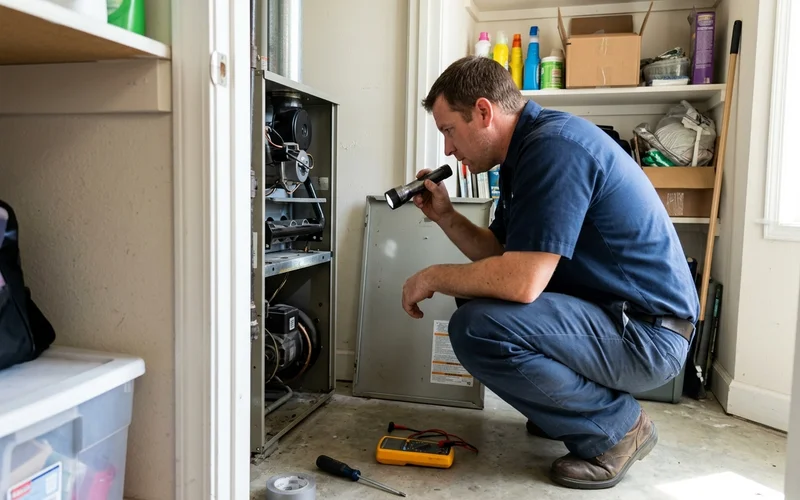
A pre-winter furnace check typically covers the burner assembly, the igniter and flame sensor, the gas valve and pressure switch, the heat exchanger, the venting, and the safety controls. On a heat pump, it covers the reversing valve operation, the defrost cycle, the refrigerant charge, the auxiliary heat strips and sequencers, and the electrical connections.
| Symptom you notice now | What it usually means | Wait or call |
|---|---|---|
| Dusty smell on first run, clears in minutes | Normal seasonal dust burn-off | Wait |
| Furnace lights then shuts off seconds later | Dirty flame sensor or ignition fault | Call |
| Heat pump blows cool air on heat mode | Defrost cycle, low charge, or reversing valve | Call if it repeats |
| System starts and stops every few minutes | Overheating, airflow restriction, or limit switch | Call |
| Aux or emergency heat on at mild temperatures | Heat pump not producing enough heat | Call |
| Any gas smell | Possible leak | Leave, then call the gas provider |
The dual-fuel wrinkle
Plenty of Alabama homes run dual-fuel systems: a heat pump that handles most of the season with a gas furnace that takes over in the coldest weather. These are efficient, and they also have twice the failure surface. The changeover logic matters, and a system configured badly will either run expensive gas heat when the heat pump could handle it, or lean on electric strips when the furnace should have taken over.
If you have both an outdoor heat pump and a gas line to the indoor unit, ask the contractor to verify the changeover setpoint during the fall visit. It is a five-minute check that can quietly save real money across a winter.
Booking now versus booking in November
There is no dramatic seasonal deal being offered here and we are not going to invent one. The advantage of calling in fall is simpler and more practical: availability. In September and October, a heating check is a scheduled appointment at a time that suits you. During the first hard cold snap, every contractor in your county is running no-heat emergency calls, and a routine inspection becomes very hard to slot in.
If your system is old enough that you have been thinking about replacement anyway, fall is also the sensible moment to get a free quote and compare it against another season of repairs. No pressure, no obligation, and you have the numbers before you need them.
When you are ready, one call connects you with a licensed, insured local contractor who covers your area, free estimate, no referral fee.
Get your heating checked before the first cold snap, see how furnace and heating repair works
Related service
Furnace and gas-heating repair from licensed Alabama contractors, ignition faults, pilot and flame-sensor issues, and gas-safety concerns handled fast.
Furnace RepairAlabama HVAC Experts Editorial Team
HVAC Content & Homeowner Resources Team
The Alabama HVAC Experts editorial team writes plain-English guides on AC troubleshooting, Alabama heat and humidity, repair-vs-replace decisions, and seasonal maintenance. Alabama HVAC Experts connects homeowners statewide with licensed, insured local HVAC contractors and is operated by ADE Marketing.
✓ Guides reviewed against licensed Alabama HVAC contractor practices