Gas Heat, Handled Safely
A furnace that won’t light during an Alabama cold snap, or any hint of a gas smell, needs a licensed, safety-first response. The contractors we connect you with diagnose igniters, flame sensors, gas valves, pilot lights, pressure switches, and limit-switch short cycling, and they treat any suspected gas leak as an emergency rather than a service call.
If you smell gas right now: leave the home without touching switches, then call your gas provider or 911 from outside. Do that first. Call us afterward and we’ll connect you with a licensed contractor to inspect the furnace once the property is safe.
Common Problems We Solve
Furnace won’t ignite
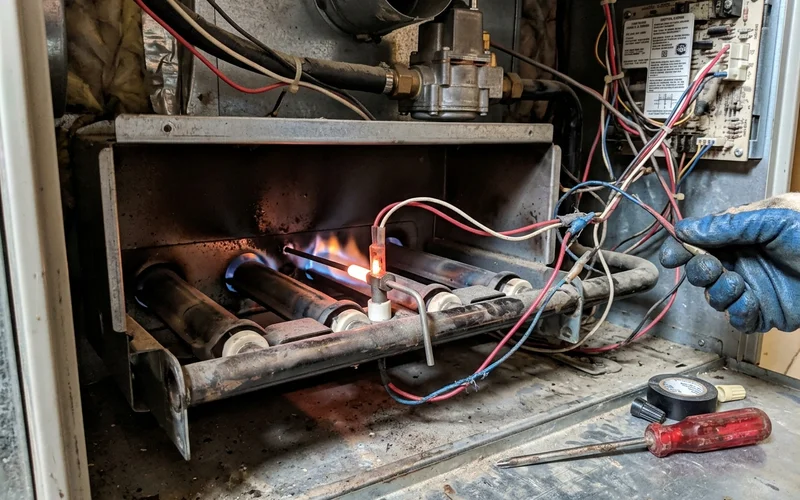
The most frequent winter call. A hot surface igniter is a fragile ceramic component that eventually cracks. A flame sensor coated in oxidation stops proving flame, so the gas valve closes a few seconds after ignition, the furnace lights, runs briefly, and shuts off, repeatedly. Both are routine repairs when correctly identified.
Short cycling and overheating
A furnace that starts and stops every few minutes is usually overheating and tripping its high-limit switch. The cause is nearly always restricted airflow: a clogged filter, closed registers, or a blocked return. Beyond the nuisance, repeated overheating is hard on the heat exchanger, which is the part you never want to damage.
Blower runs, no heat
Points at the gas side: valve, igniter, sensor, or the pressure switch that has to prove the inducer is drawing properly before the burners light. Diagnosis follows the ignition sequence step by step to find where it stops.
Noises and smells
A brief dusty smell on the first burn of the season is normal. A persistent burning smell, rumbling, or booming on ignition is not, and a sulfur or rotten-egg odor means gas, evacuate and call your gas provider.
Suspected carbon monoxide risk
If a CO alarm sounds, leave and call 911. A cracked heat exchanger can put combustion gases into your home’s air, and it’s the one fault where replacement rather than repair is usually the honest answer.
Why Alabama Furnace Calls Cluster
Alabama’s heating season is short and sharp. Systems idle through a mild fall, then get asked to run flat out for a week when a cold front pushes down. Dust that settled on burners all summer, a marginal igniter, and a filter nobody changed since June all surface at the same time, and they surface across the whole state on the same night.
That’s the practical case for an annual pre-winter check, particularly for a furnace that only runs a few weeks a year, and our seasonal walkthrough on getting your Alabama heating ready before the first cold snap covers what to do and when. It’s also why calling early in the day during a cold snap gets you seen sooner: the schedule fills as the temperature drops.
Repair Costs and Honest Options
Igniters, flame sensors, and thermocouples sit at the affordable end of furnace repair. Gas valves, inducer motors, and control boards land in the middle. A cracked heat exchanger typically means replacement, because repairing one safely is rarely practical. These are general market observations, not our prices. The contractor gives you a free, no-obligation estimate for your specific furnace before starting.
If you run a dual-fuel system, the heat pump repair side of the network covers the other half, and the same call reaches both.