What AC Repair Covers
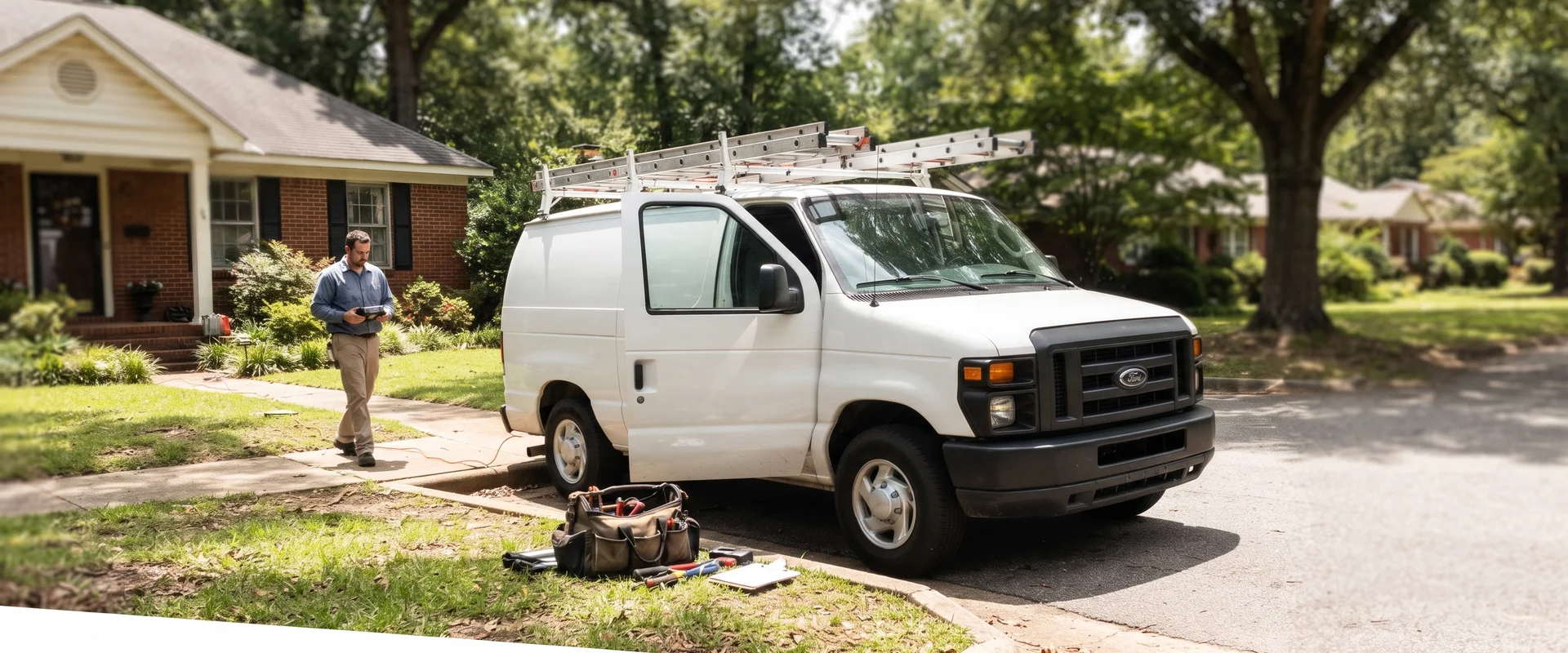
When your AC quits in Alabama heat, one phone call connects you with a licensed, insured HVAC contractor who works in your area and can come out the same day in most locations. You describe what the system is doing, we route you to someone who covers your county, and they give you a free, no-obligation estimate before any work begins.
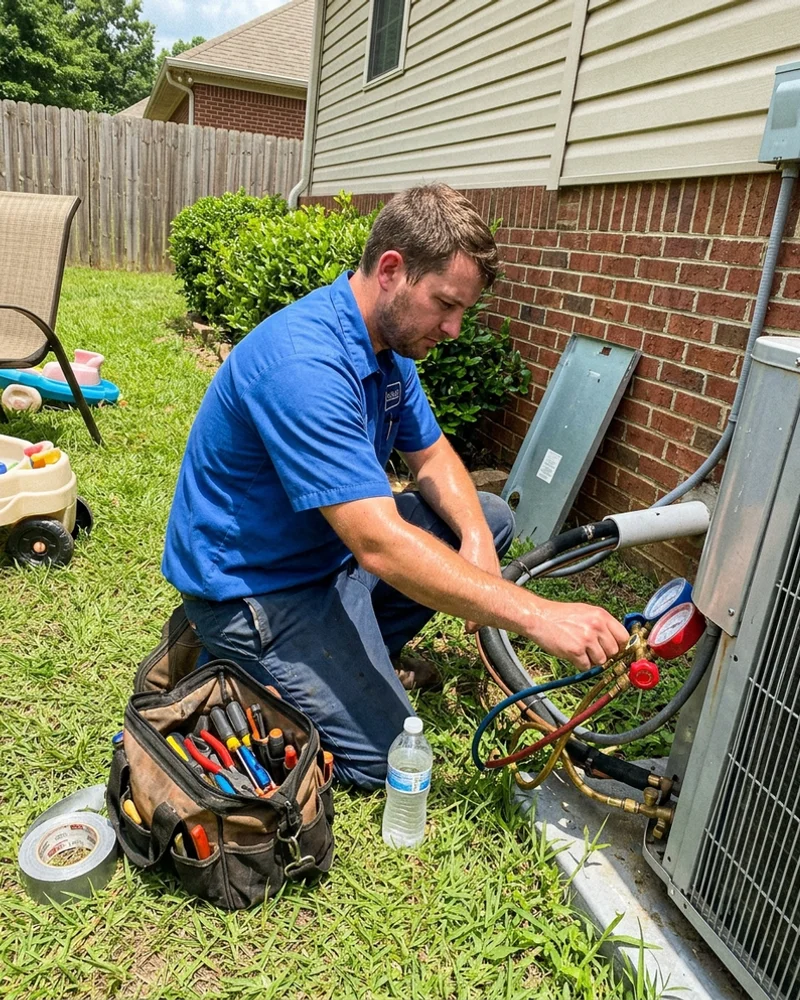
The contractors we connect you with handle the full range of residential cooling faults: systems blowing warm air, units that won’t start at all, failed run and start capacitors, burnt contactors, condenser fan motors that have seized, refrigerant leaks, a stuck thermostatic expansion valve (TXV) that meters refrigerant into the coil, frozen evaporator coils, clogged condensate drain lines, and compressor faults. Emergency phone answering is available 24/7, which matters when a system dies at 9 PM in July and the house is still 88 degrees at midnight.
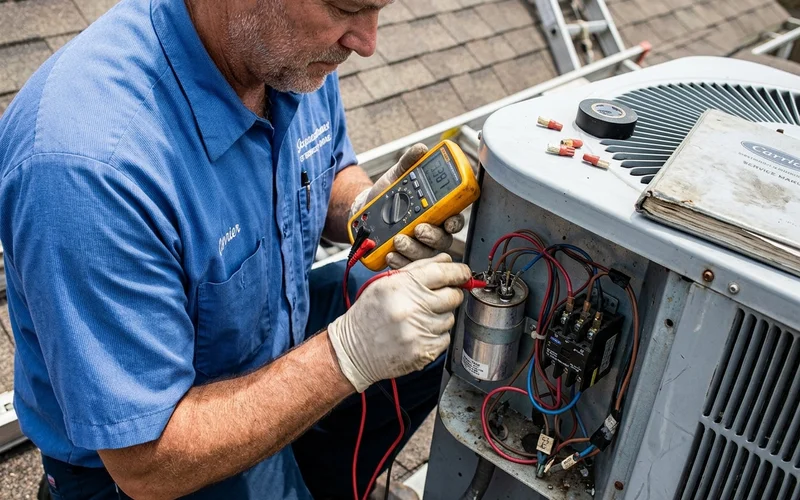
What separates a good repair from a bad one is the order of operations. A proper diagnosis checks the electrical side, the airflow, and the refrigerant charge before anyone reaches for a part. That is how a technician tells the difference between a failed capacitor and a dead compressor, or between low refrigerant and a coil that iced over because the filter was choked. It is also how you avoid paying for a replacement you did not need.
Common Problems We Solve
AC running but blowing warm air
The most frequent summer call in Alabama. Restricted airflow from a clogged filter, a refrigerant leak, a frozen evaporator coil, or a tripped outdoor unit can all produce the same symptom. The contractor measures delta T (the temperature split across the coil), checks the charge, and works backward to the actual cause instead of guessing.
AC won’t turn on
Usually a tripped breaker, a failed capacitor, a float switch that cut power because the drain line clogged, or a thermostat problem. Checking your breaker and thermostat is safe. Anything inside the unit is not: capacitors store a charge even with power off, which is why this is a licensed-technician job.
Water leaking inside the house
Condensate drains clog with biofilm and dust, water backs up into the pan, and in attic or closet installations it finds your ceiling. The float switch is supposed to shut the system down first. If you see a stain or a puddle, shut it off and call.
Ice on the coil or the refrigerant line
Ice means either airflow restriction or low refrigerant. Both need fixing at the source. Running a frozen system pushes liquid refrigerant back to the compressor, which is the fastest way to turn an affordable repair into a system replacement.
Buzzing, grinding, or rattling
Buzzing usually points at a capacitor or contactor. Grinding is a motor bearing failing and means shut it off now. Rattling is often debris or loose panels, which is the least urgent of the three but still worth checking before it damages a fan blade.
Short cycling
A system that starts and stops every few minutes is either oversized, low on refrigerant, choked for airflow, or tripping a safety limit. It wears out the compressor and drives your power bill up, so it is worth diagnosing even though the house may still be cooling.
What This Costs
Alabama repair prices vary by part and access, not by a fixed menu. General market figures put small electrical components at the low end, blower and condenser fan motors in the middle, and compressors, coil replacements, and significant refrigerant work at the top. Older R-410A systems now carry an extra consideration: refrigerant prices are rising as the phase-out progresses, which changes the math on repeated leak repairs. Systems installed more recently may already run on R-454B refrigerant instead, and the contractor needs to know which one is in your unit before opening the line set.
Those are market figures for reference only, not our prices. The licensed contractor diagnoses your specific system, tells you what it needs, and quotes it. You approve the price before work starts, and there is no referral fee added for connecting you.
When to Repair and When to Stop
Repair usually wins on systems under ten years old, on any electrical part, and on drain and airflow faults. Replacement starts making sense when the system is past ten to fifteen years, the repair approaches half the price of a new unit, or the same fault keeps coming back. If you have been quoted a full replacement and it feels premature, a second opinion costs you nothing here, because the estimates are free.
Whatever it turns out to be, the path is the same: call, describe the symptom, get connected with a licensed local contractor, and see a free estimate before anyone starts work.