
What Is Actually Leaking
Your air conditioner does not carry water. It creates it. As warm, humid Alabama air passes over a cold evaporator coil, moisture condenses out and drips into a pan below the coil, then runs out of the house through a PVC condensate drain line. On a humid August day, a typical residential system can produce several gallons of condensate.
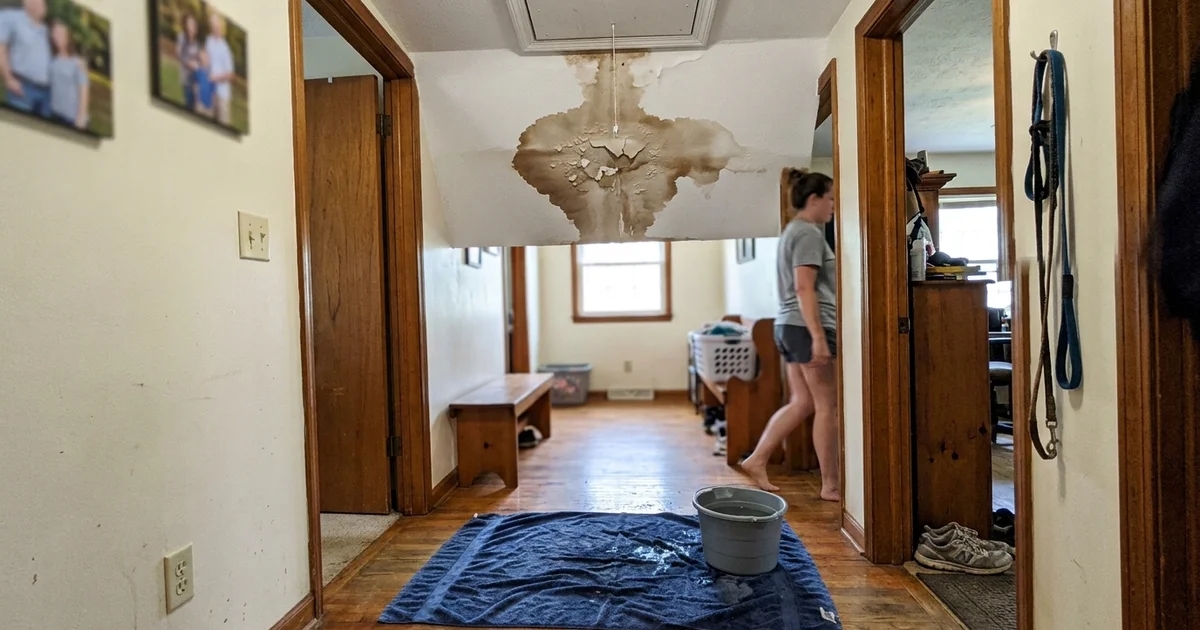
That whole arrangement works fine until the drain line clogs. Dust, biofilm, and algae accumulate inside the pipe, the water slows, then stops, and the pan fills. Once the pan overflows, the water goes wherever gravity takes it, which in an attic installation means insulation, drywall, and eventually your ceiling.
The other causes are less common but worth knowing. A rusted-through primary drain pan lets water out even when the drain is clear. A disconnected or improperly sloped drain line never drains properly to begin with. And a frozen evaporator coil that thaws all at once can dump more water than the pan can handle.
Stop the Damage First
Turn the system off at the thermostat. Not to auto, not to fan, off. The system is manufacturing the water that is damaging your house.
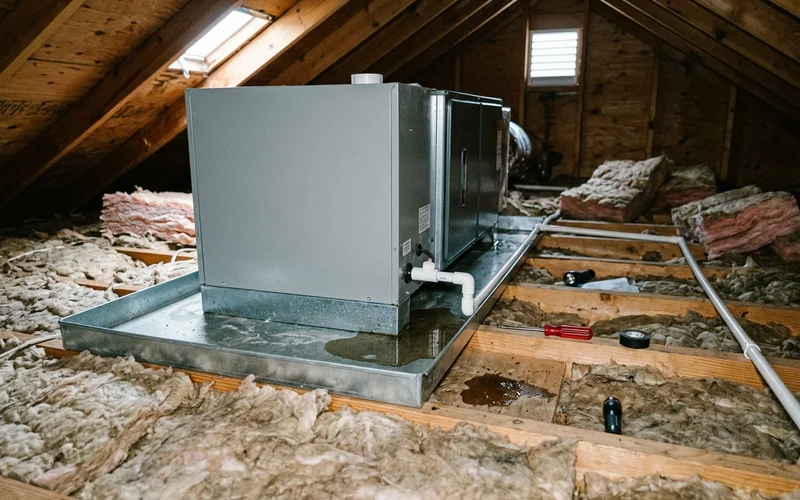
Then find the water. If your air handler is in the attic, look at the ceiling below it for stains or sagging, and get into the attic if it is safe to do so. If it is in a closet or garage, look at the floor around the unit and the base of the walls. Put down towels and a bucket, and move anything valuable out of the way.
If your unit sits in a secondary drain pan, attic installations should, check whether that pan is holding water. Standing water there means the primary drain has failed and the backup is doing its job. That backup pan has its own drain line, usually terminating somewhere visible outside like above a window, specifically so you notice.
The float switch is on your side
Many systems have a float switch that cuts power when the pan fills. If your AC shut itself off and there is water present, that is not a coincidence and not a separate fault, it is the safety doing exactly what it was installed to do.
What You Can Try, and What You Cannot
The homeowner-accessible fix is the wet/dry vac trick. Find where the drain line terminates outside, usually a white PVC pipe near the outdoor unit or along a wall. Seal a wet/dry vac hose over the end with your hand or a rag, run it for two or three minutes, and see whether a slug of dark sludge comes through. If it does, the clog is cleared and the line will start draining again.
What you should not do: pour bleach into the drain line indiscriminately, disassemble the air handler, or run the system to “see if it dries out.” Bleach can damage the pan and the metal around it, and running the system just makes more water.
If the vac trick fails, if it works but the clog returns within a few weeks, or if you see rust and staining in the pan itself, the underlying problem needs a technician. That means AC Repair, a licensed contractor can clear the line properly, treat the pan, verify slope, replace a corroded pan, and check that the float switch actually works.
Why This Happens So Often in Alabama
Humidity is the whole story. In a dry climate an air conditioner produces relatively little condensate. Here, from May through September, dew points sit high enough that the system runs as a dehumidifier for a large part of every day. More condensate means more opportunity for a line to clog and more water available to cause damage when it does.
Attic installations, which are extremely common across the state, make the consequences worse. A closet unit leaking onto a garage floor is annoying. The same leak above a bedroom ceiling is drywall, insulation, paint, and potentially mold remediation.
That is why drain-line service is a standard part of an annual tune-up here, and why it is one of the cheapest preventable failures in the whole system. If your AC also shut itself off completely when this happened, the AC won’t turn on guide explains the float switch side of it in more detail.