
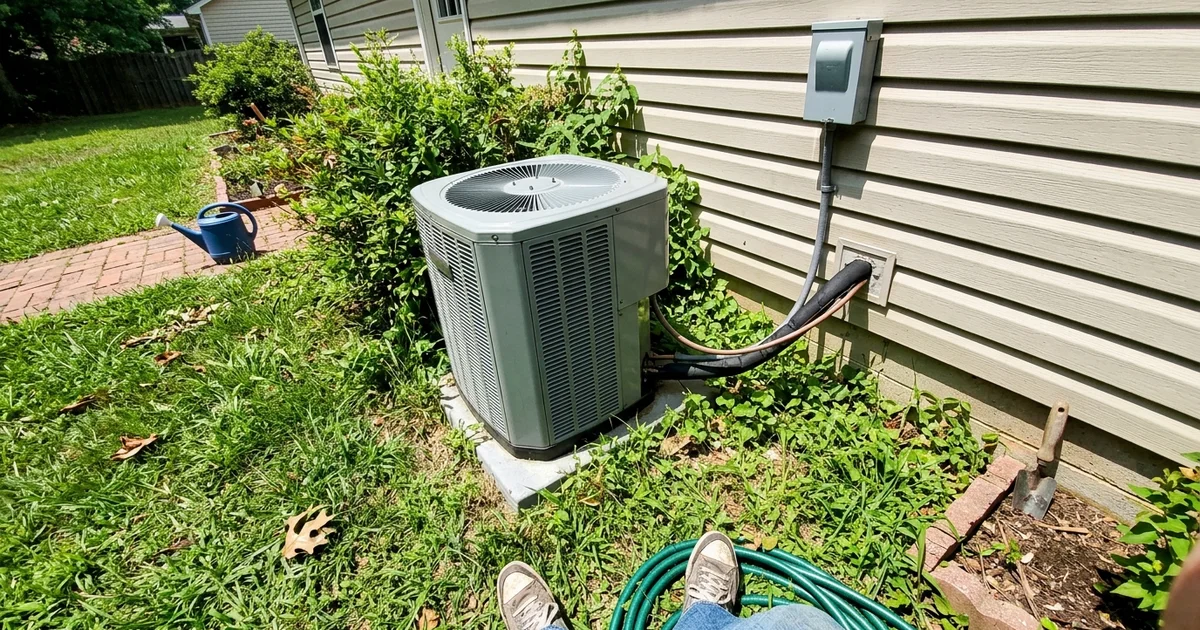
Why an AC Refuses to Start
A dead air conditioner is a different problem from one that runs badly, and the list of causes is shorter. Five things account for most of them: a tripped breaker, a tripped float switch on the condensate drain, a failed capacitor, a thermostat problem, or a disconnect switch that is off.
Each has a distinct signature. Nothing at all happening anywhere, indoors and out, points at power or the thermostat. The indoor blower running while the outdoor unit stays silent points at the condenser circuit, its breaker, or a capacitor. Nothing happening plus water near the indoor unit points at the float switch. A humming outdoor unit whose fan will not spin points squarely at a capacitor.
Getting that far in your own head saves the technician time and tells you whether this is a five-minute fix or a service call. If it turns out to be the latter, AC Repair connects you with a licensed local contractor, usually same day.
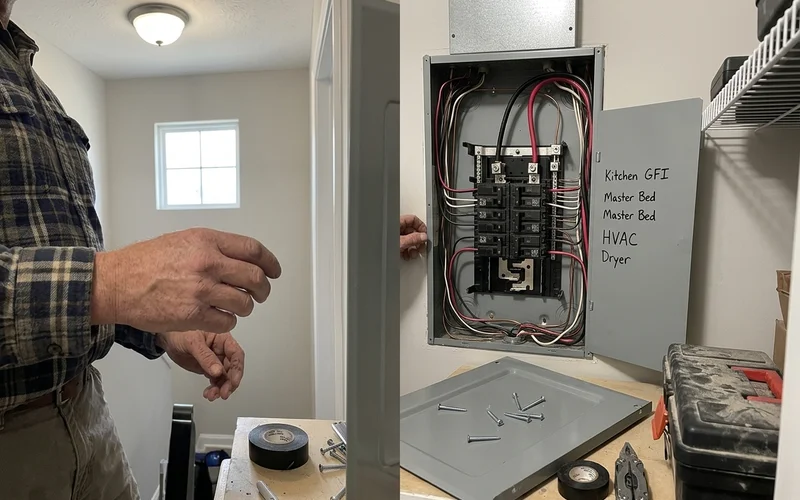
The Safe Checks
Thermostat. Cool mode selected, setpoint below room temperature, fan on auto, fresh batteries. Do this first every time.
Breaker panel. Look for a breaker sitting in the middle position rather than fully on. Air handlers and condensers usually have separate breakers, so check both. Reset once, firmly to off then back to on. One reset only.
Outdoor disconnect. There is a small box on the wall beside the condenser containing a pull-out or a switch. It gets turned off during other work and forgotten.
Indoor service switch. Near the air handler, often in an attic or closet, there is frequently a switch that looks exactly like a light switch. People flip it while storing boxes.
Float switch and drain. If there is water in or around the drain pan, or a small inline switch on the PVC drain line has flipped, the safety cut-off has done its job. Clearing the drain is sometimes a wet/dry vac task at the outdoor cleanout, but recurring clogs need a technician.
Where to Stop
Everything past that list belongs to a licensed technician, and it is worth being specific about why. Capacitors store an electrical charge that persists after the power is off. They are the single most common cause of a humming, non-starting outdoor unit, and they are also the most common reason a homeowner gets hurt attempting a DIY AC repair.
Two hard stops
A breaker that trips a second time means an electrical fault. A humming outdoor unit with a still fan means a stored charge inside the cabinet. Neither is a homeowner job.
Contactors are the other frequent culprit. They are the electrical relay that lets the thermostat energize the compressor, and their contacts pit and burn over time. A contactor that has welded shut or failed open produces a system that either will not start or will not stop.
The Alabama Pattern
Two things make this failure common here. First, runtime. A capacitor rated for a decade of moderate use might last six or seven years under Alabama’s five-month cooling load, and the failure usually happens on the hottest day because that is when the system asks the most of it.
Second, storms. Summer thunderstorms produce voltage surges that take out capacitors and contactors across whole neighborhoods at once. If your system went silent right after a storm rolled through, mention that when you call. It is a strong hint toward an inexpensive electrical part rather than something serious.
Coastal areas add corrosion to the list. Salt air works on electrical connections and contactor surfaces along the Eastern Shore and down toward Gulf Shores, so those components fail earlier there than they do inland.
What a Technician Will Do
The diagnosis is methodical: confirm voltage at the disconnect, test the capacitor under load, check the contactor, verify the low-voltage control circuit and the transformer, and check every safety switch in the chain including the float switch. That sequence finds the fault without replacing parts hopefully.
Most of these repairs are at the affordable end of HVAC work, and you get a free, no-obligation estimate before anything is replaced. If the diagnosis reveals a seized compressor rather than a control fault, that is a bigger conversation, and it is one worth having with both repair and replacement numbers in front of you.
If water around the indoor unit was part of your symptom, read the AC leaking water guide next, the drain problem and the shutdown are the same story.