
Two Very Different Failures
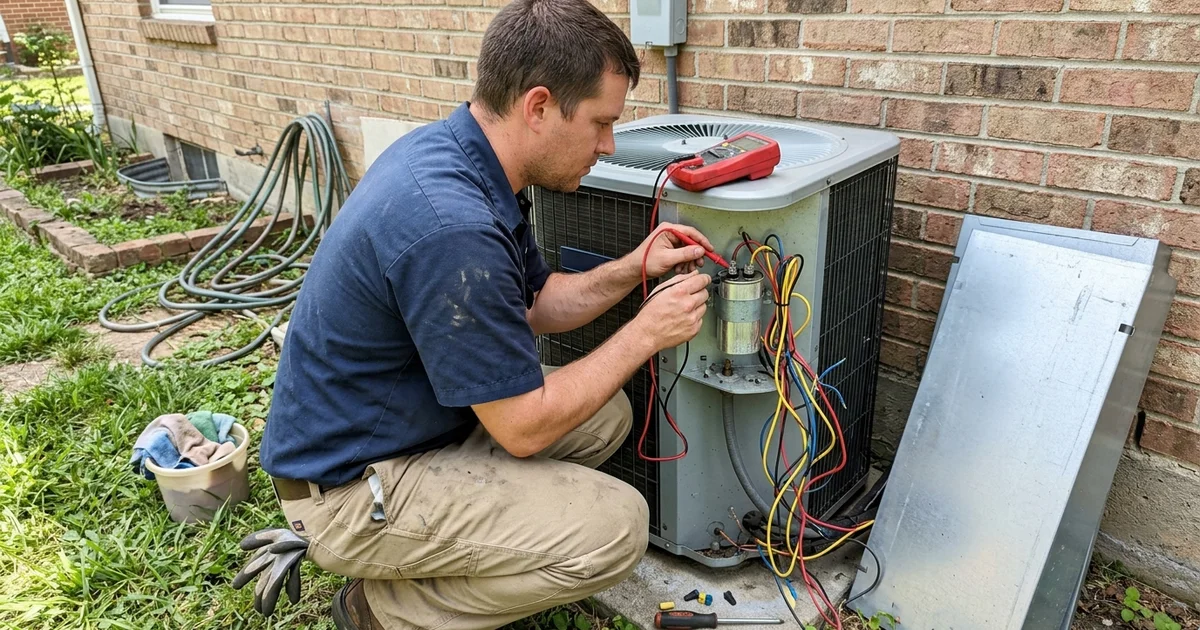
These two parts get confused constantly, and the confusion is expensive. A capacitor is a small cylindrical component that stores and releases energy to help the compressor and fan motor start and run. A compressor is the pump at the heart of the refrigeration circuit, and it is the single most expensive part in your system.
The reason they get mixed up is that both produce the same headline symptom: the outdoor unit hums, no cold air arrives, and the house gets hotter. From the driveway they look identical.
They are not identical from a repair standpoint. One is a quick, low-cost part swap. The other is a major repair that, on an older system, often means it is time to talk about replacement instead.
Telling Them Apart
| Symptom | Suggests capacitor | Suggests compressor |
|---|---|---|
| Outdoor unit hums but nothing spins | Very common | Possible |
| Fan starts if nudged with a stick | Classic capacitor sign | No |
| Clicking on and off every few minutes | Common | Possible |
| Breaker trips immediately on start | Sometimes | Common |
| Loud groan, then silence | Uncommon | Common |
| Fan spins fine, no cooling at all | Possible (run capacitor) | Common |
| Visible bulging on top of the part | Definitive capacitor failure | N/A |
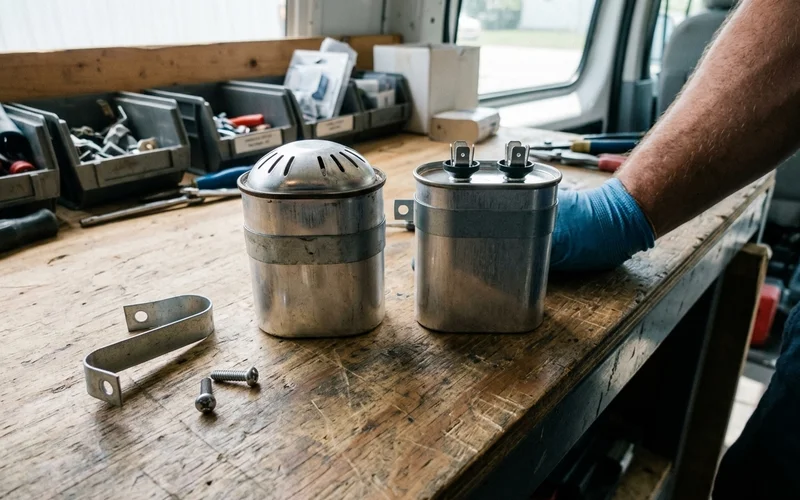
The visual check is the one homeowners can sometimes make. A healthy capacitor has a flat top. A failed one often bulges or domes upward, and occasionally leaks. If you can see the top of the capacitor through a grille without opening anything, a domed top tells you a great deal.
Do not open the electrical compartment to look. That is the point where this stops being a homeowner check.
The most expensive misdiagnosis in HVAC
Condemning a compressor when a capacitor has failed. It happens often enough that a second opinion on any large quote is simply good practice, especially when the estimate is free anyway.
The Cost Gap
We do not publish prices, but the relationship is worth stating plainly: a capacitor is among the cheapest parts in your air conditioner, and a compressor is among the most expensive repairs available. The gap is not double or triple. It is an order of magnitude.
That gap is exactly why the diagnosis matters more than the part. A technician who tests the capacitor under load with a meter is doing thirty seconds of work that can save you thousands. A technician who looks at a non-starting unit and quotes a compressor without testing has skipped the step that matters most.
When a Compressor Really Has Failed
Sometimes it genuinely has. Signs that point that way include a breaker that trips instantly and repeatedly, a compressor that is seized and drawing locked-rotor current, an internal short detectable at the terminals, or a system that has been running low on refrigerant for a long time and has finally overheated.
If that is the verdict, ask two questions before agreeing. First, how old is the system? A compressor replacement on a system past twelve years is often a poor investment compared with replacement, especially in Alabama where runtime accumulates fast. Second, is it under manufacturer warranty? Compressors often carry longer parts warranties than the rest of the system, which can change the number substantially even if labor is not covered.
What To Do Next
If your unit is humming and not starting, shut it off at the thermostat. Repeatedly energizing a compressor that cannot start generates heat in the windings and is genuinely how a capacitor problem becomes a compressor problem.
Then get it tested. AC Repair connects you with a licensed local contractor who will measure the capacitor, check the contactor, and confirm the compressor’s condition before quoting anything. The estimate is free, there is no referral fee, and same-day service is available in most areas.
If the unit is not starting at all rather than humming, the AC won’t turn on guide covers the checks that come before this one. And if you have already been handed a replacement quote based on a “dead compressor,” the free second opinion guide is worth five minutes before you sign.