
The Four Usual Suspects
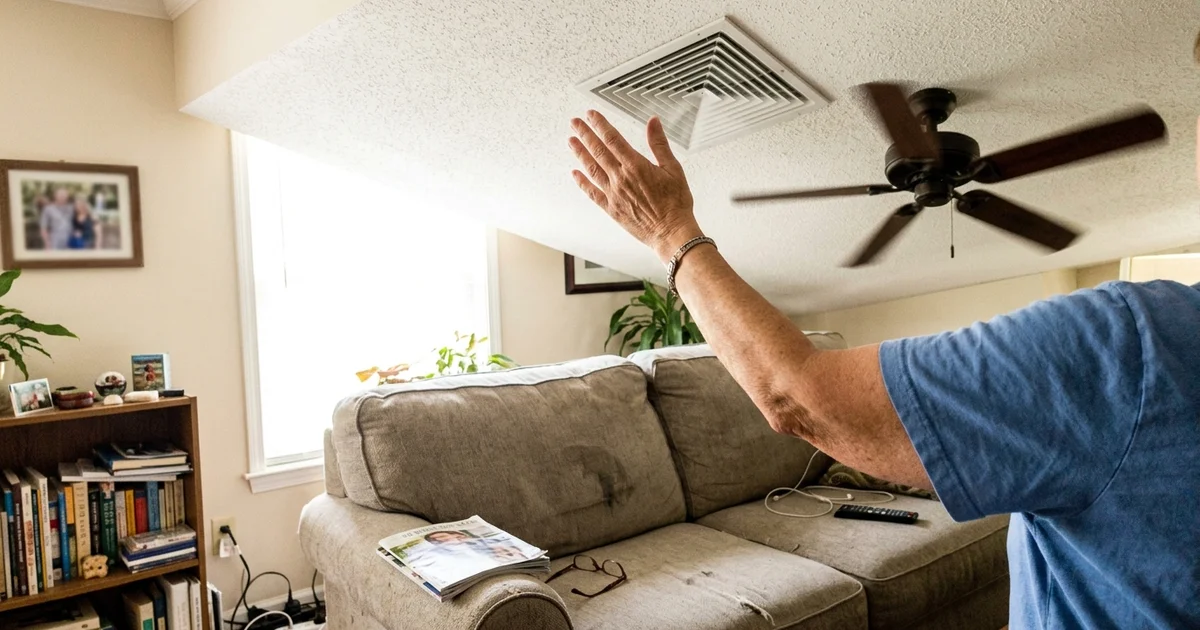
An air conditioner that runs but blows warm air is the single most common summer complaint in Alabama, and it almost always comes down to one of four things: restricted airflow, low refrigerant, a frozen evaporator coil, or an outdoor unit that is not running.
Restricted airflow. Usually a clogged filter, sometimes a dirty evaporator coil or a crushed duct run. Less air across the coil means less heat removed from your house.
Low refrigerant. A sealed system does not use refrigerant up, so low charge means a leak somewhere. Capacity drops, the air from the vents gets progressively less cold, and the system runs longer and longer trying to keep up.
Frozen evaporator coil. Either of the first two causes can produce this. Ice forms on the coil, blocks airflow almost completely, and the vents deliver air that is barely moving and no longer cold.
Outdoor unit not running. If the indoor blower runs but the condenser outside sits silent, you are circulating air with no cooling happening at all. A tripped breaker, a failed capacitor, or a burnt contactor are the usual reasons.
If you want the fastest route to a diagnosis rather than a self-check, AC Repair connects you with a licensed local contractor who can measure all four in one visit.
Checks Worth Doing Yourself
Start at the thermostat. It sounds obvious, but a system switched to “fan on” rather than “auto” circulates room-temperature air continuously and feels exactly like a broken air conditioner. Confirm cool mode, a setpoint below room temperature, and fresh batteries.
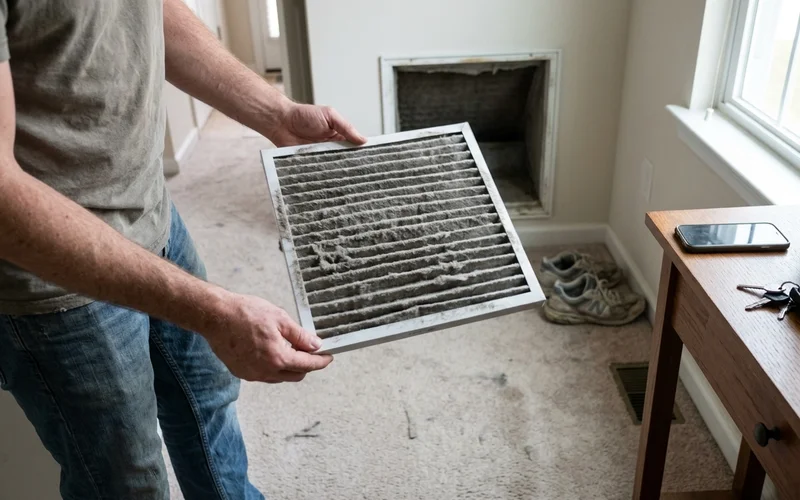
Pull the filter. If it is grey and matted, replace it. In Alabama, with a five-month cooling season and heavy spring pollen, filters clog faster than the box suggests.
Walk outside and listen. The condenser fan should be spinning and the unit should be humming. If it is silent, check the breaker panel and the disconnect box on the wall beside the unit. If the fan is not turning but you hear a hum, stop and call, that pattern points at a capacitor, and capacitors hold a charge that can injure you even with the power off.
Look at the refrigerant line where it enters the house. If the larger insulated line is frosted or iced, you have a frozen coil. Turn the system off, switch the fan to “on” to help it thaw, and let it drain for a few hours before anyone runs it again.
Finally, check that returns and supply registers are not blocked by furniture, and that the outdoor unit has clearance on all sides. Grass clippings and pine straw packed against a condenser coil is a genuinely common cause of poor cooling in the Southeast.
The one thing not to do
Do not keep running a system that is iced up or one whose breaker keeps tripping. Both are how a repairable fault becomes a compressor replacement.
Why Alabama Makes This Worse
Two factors stack the odds here. The first is runtime. From May through September, a system runs most of the day, which means a small refrigerant leak or a marginally dirty coil that would be invisible in a milder climate shows up as a real performance problem.
The second is humidity. An air conditioner in Alabama spends a large share of its energy removing moisture rather than lowering temperature. On a humid August afternoon, a system already slightly compromised has nothing left in reserve. That is why homeowners so often report that the AC “worked fine in June”, it did, because in June it had margin.
Salt air adds a third factor along the Gulf Coast. Condenser coils in Baldwin County corrode faster, and pinhole refrigerant leaks develop earlier than they do inland.
When It Needs a Technician
Call if the filter is clean and the outdoor unit still is not running, if the line is iced up, if the breaker trips, if the air is only slightly cool with a temperature split under about 15 degrees, or if the system has been struggling to keep up for weeks and is now losing.
A proper diagnosis measures rather than guesses. The technician checks the temperature split across the coil, reads refrigerant pressures for superheat and subcooling, tests the capacitor and contactor, and inspects airflow. That combination separates a genuine leak from a dirty coil from an electrical fault, which matters because the three have very different costs.
If your coil has already frozen once, the frozen AC coil guide explains how to thaw it safely and why it will keep happening until the underlying cause is fixed.