Where Ductless Makes Sense
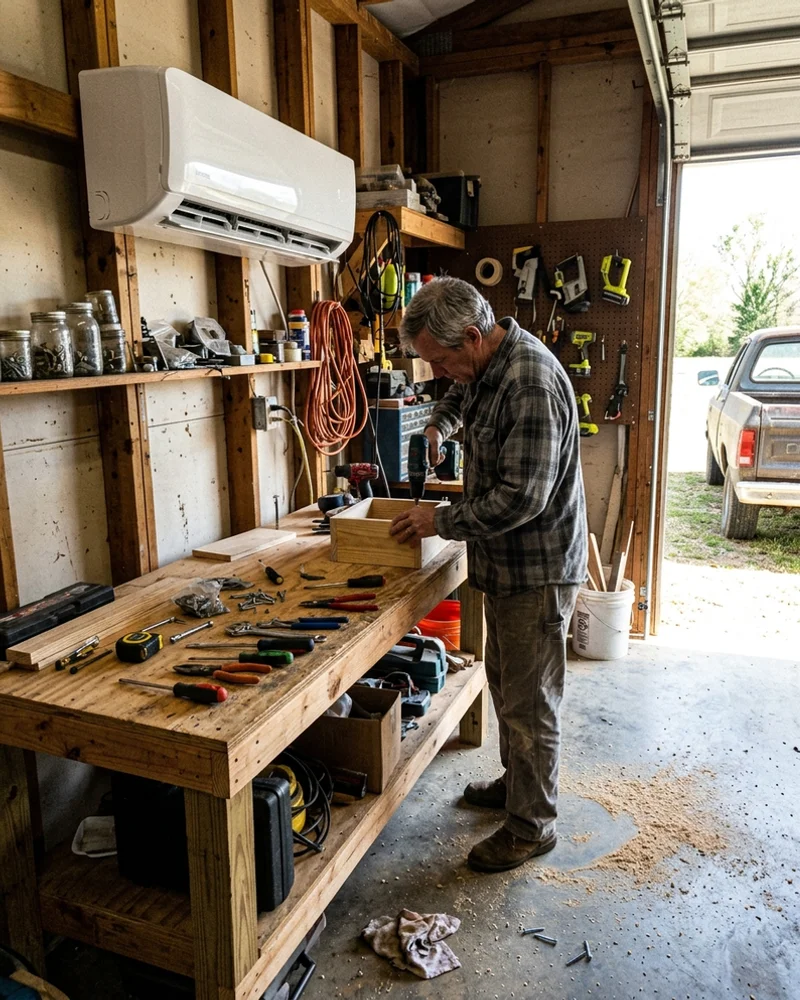
Ductless mini-splits are ideal for Alabama garages, room additions, sunrooms, and older homes without ductwork, and they excel at humidity control. The licensed contractors we connect you with repair and install single- and multi-zone systems, diagnose common error codes, and service major brands including Mitsubishi Electric and Daikin.
The appeal is straightforward. Extending central ductwork into a converted garage or a new addition is expensive, disruptive, and often physically awkward. A mini-split puts a head unit on the wall, runs a small insulated line set through a three-inch hole, and conditions that space on its own thermostat. No ducts, no losses in a 130-degree attic, and no arguing with the rest of the house over the thermostat setting.
Common Problems We Solve
Blinking lights and error codes
Every major brand signals faults through blink patterns on the indoor head or codes on the remote. They generally fall into three buckets: sensor faults, indoor-to-outdoor communication faults, and refrigerant or pressure faults. A single power cycle sometimes clears a transient code. A repeating one is telling you something real.
Not cooling, or cooling weakly
Dirty filters and a fouled blower wheel are the first suspects, especially in humid Alabama air where biofilm builds up inside the head. After that: low refrigerant from a leak, often at a flare connection, or a failing inverter board.
Water dripping from the indoor head
The condensate line has blocked, or the condensate lift pump has failed on installations where the ductless head unit sits below the drain exit. Either way, water is coming out of the front of the wall mount evaporator and onto your wall. Shut it off and call.
Outdoor unit not starting
Communication faults, control board failures, or an electrical supply issue on the dedicated circuit. Mini-splits run on their own breaker, which is worth checking before anything else.
Installation: What Actually Determines Quality
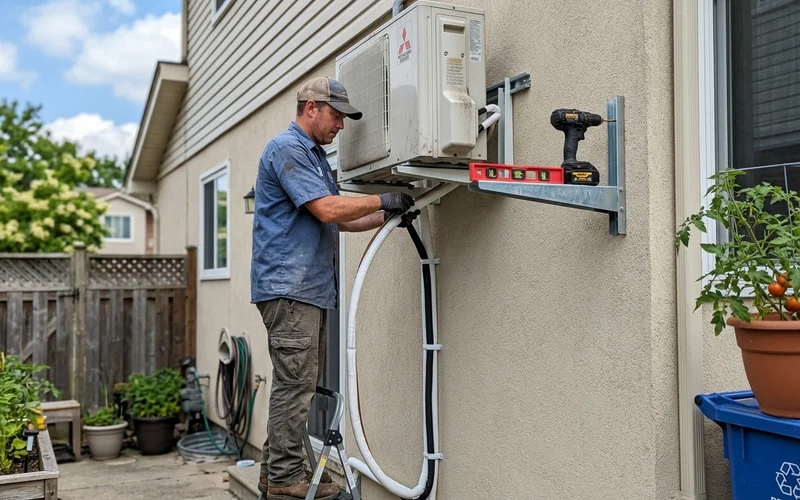
Mini-splits are less forgiving of sloppy installation than central systems. Three things decide how long yours lasts. Flare connections have to be cut and torqued properly, because a bad flare leaks refrigerant slowly for years. The line set has to be evacuated to a proper vacuum before charging, or moisture stays in the system and corrodes it from inside. And the head has to be sized for the space rather than oversized for comfort, since an oversized ductless head short cycles and leaves the room damp.
For multi-zone setups, the outdoor unit routes refrigerant to each indoor head through a multi-zone branch box, and it gets sized against the combined load. Undersize it and every zone underperforms on the hottest afternoon, which is exactly when you notice. Good ductless zoning means each room reaches its own thermostat setting instead of fighting over one.
Cost and Comparison
Single-zone installations in a straightforward location sit at the affordable end of ductless work. Multi-zone systems with several heads, long line runs, and new electrical circuits sit considerably higher. Against a window unit, a mini-split costs several times more upfront and returns it in efficiency, quiet operation, humidity control, heating capability, and lifespan.
As always, those are general market figures rather than our prices. The contractor gives you a free, no-obligation quote for your space, and there’s no referral fee to you. If you’re weighing ductless against extending your central system, the AC installation side of the network can quote both.