
The Spaces Central Systems Never Solve
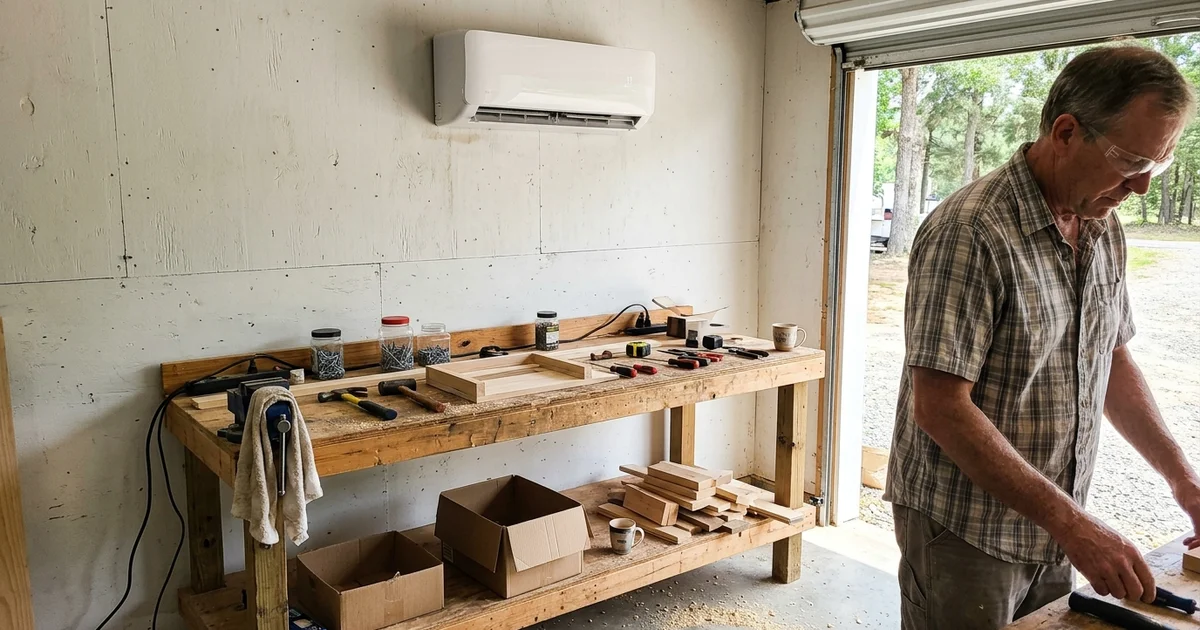
Every Alabama home has one, and it is the single most common reason homeowners ask about ductless mini-split service. The bonus room over the garage that is ten degrees hotter than everywhere else. The addition someone built without extending the duct properly. The sunroom that is unusable from June to September. The workshop in the garage that becomes a sauna by noon.
Extending central ductwork into those spaces is expensive, disruptive, and often physically impractical. Worse, it frequently does not work: adding a long duct run to a system that was sized for the original house means robbing air from somewhere else.
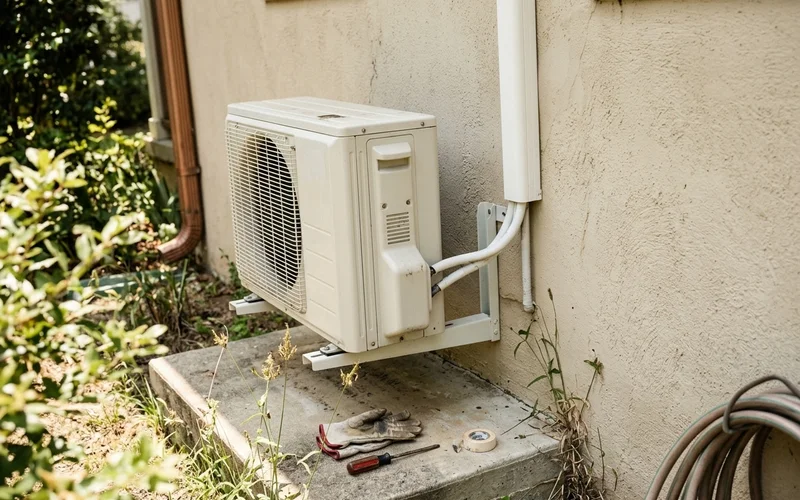
A ductless mini-split solves it differently. A head unit mounts on the wall, a small insulated line set runs through a hole roughly three inches across to an outdoor unit, and that space gets its own conditioning on its own thermostat.
The Four Alabama Use Cases
Garages and workshops. Uninsulated, west-facing, and unbearable by afternoon. A mini-split makes a garage usable year round, and because it heats as well as cools, it works in January too. Size generously here, garage doors leak air and the space is rarely well insulated.
Room additions. New square footage almost always exceeds what the original system was sized for. Rather than replacing the whole central system to serve one room, a mini-split conditions the addition independently.
Older homes without ductwork. Many pre-war and mid-century Alabama homes never had central air, and retrofitting duct means soffits, dropped ceilings, and lost closet space. Ductless avoids all of it, with one head per room or zone.
Rooms the system never reaches. Bonus rooms over garages, upstairs bedrooms at the end of a long duct run, and enclosed porches. A mini-split supplements rather than replaces the central system.
The humidity bonus
Inverter-driven mini-splits run long and slow rather than cycling hard on and off, which removes considerably more moisture from the air. In a climate where comfort is as much about humidity as temperature, that difference is noticeable.
Sizing Matters More Than You Would Expect
The temptation with a hot garage is to buy the biggest head available. Resist it. An oversized ductless head short cycles exactly like an oversized central system, cooling the air quickly and shutting off before removing meaningful moisture. The result in Alabama is a cold, clammy space.
Correct sizing accounts for the square footage, ceiling height, insulation level, sun exposure, and how the space is used. A 400-square-foot insulated bonus room and a 400-square-foot uninsulated garage with a west-facing door are different loads entirely.
For multi-zone systems, the outdoor unit gets sized against the combined load of all the heads. Undersize it and every zone underperforms on the hottest afternoon, which is precisely when you notice.
What a Good Installation Looks Like
Ductless equipment is less forgiving of sloppy work than central systems. Flare connections must be cut and torqued correctly or they leak refrigerant slowly for years. The line set must be evacuated to a proper vacuum before charging, or moisture stays in the system. The condensate line needs a clear path, and where the head sits below the drain exit, a lift pump.
Those details, not the brand on the box, determine whether your mini-split lasts fifteen years or fails in five.
If you are weighing a mini-split against a cheaper window unit, the comparison guide lays out the tradeoffs. For a free, no-obligation quote on your space, Ductless Mini-Split Service connects you with a licensed local contractor.