
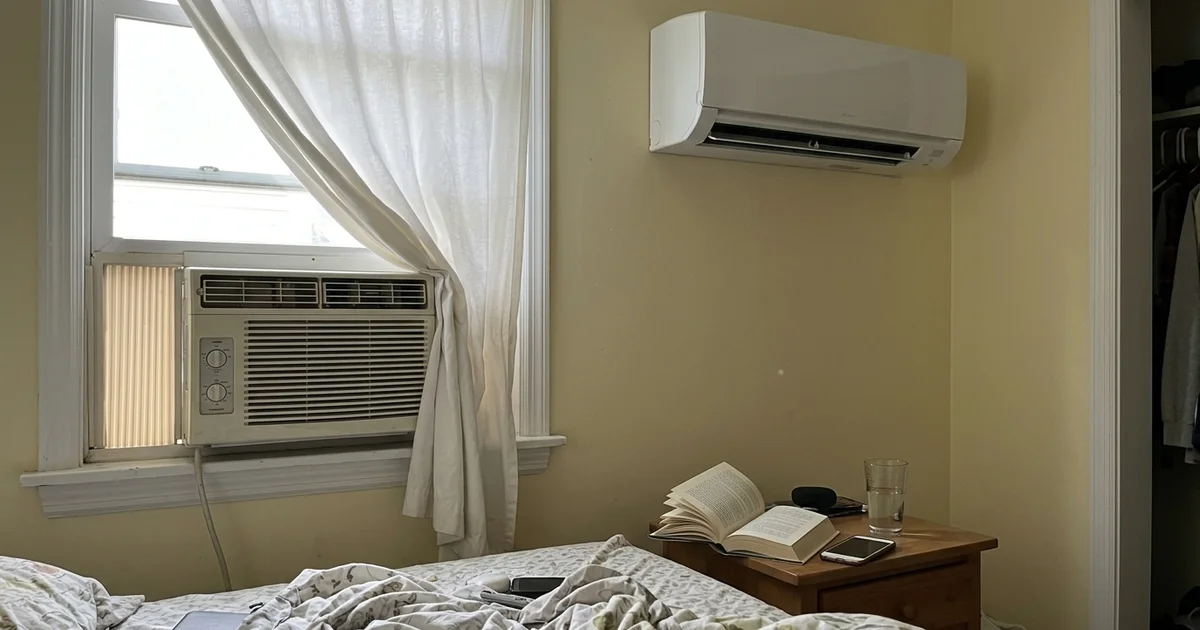
The Honest Comparison
| Factor | Window unit | Ductless mini-split |
|---|---|---|
| Upfront cost | Low | Several times higher |
| Installation | DIY in an afternoon | Licensed contractor |
| Efficiency | Moderate | High (inverter driven) |
| Noise indoors | Compressor in the room | Compressor outside, head is quiet |
| Humidity control | Poor to fair (cycles hard) | Good (runs long and slow) |
| Heating | Rare, and inefficient | Yes, heat pump in both directions |
| Window use | Blocks the window | Window stays usable |
| Security | Window partially open | Sealed wall penetration |
| Typical lifespan | Shorter | Considerably longer |
| Appearance | Visible from outside | Small head indoors, unit outside |
Neither column is wrong. They are answers to different questions, and only one of them involves booking ductless mini-split service with a licensed contractor.
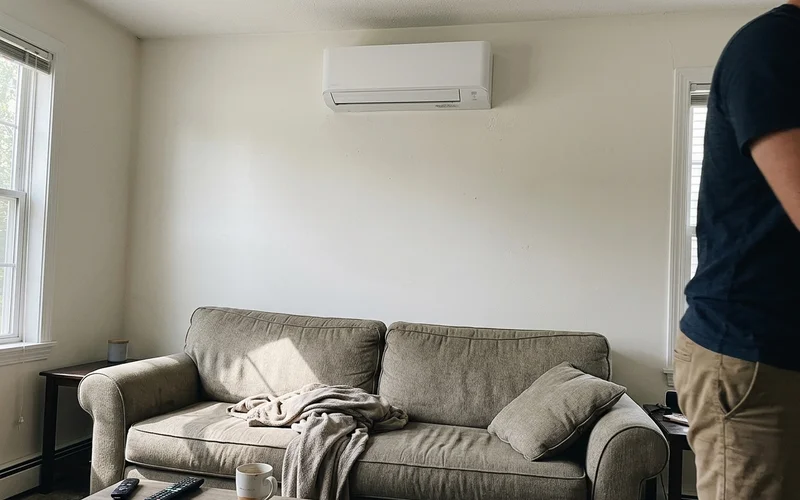
Where the Window Unit Wins
Cost, immediacy, and flexibility. You can buy one this afternoon, install it yourself, and have the room cool by evening. If you rent, if the space is temporary, if you only need it a few weeks a year, or if the budget simply is not there, a window unit is the sensible answer and nobody should talk you out of it.
They are also easy to replace. When one dies, you buy another. There is no service call, no refrigerant handling, and no contractor scheduling.
Where the Mini-Split Wins
Humidity. This is the big one in Alabama. A window unit cools quickly and cycles off, which leaves moisture behind. A mini-split’s inverter compressor runs continuously at reduced speed, which pulls far more water out of the air. The subjective difference is a room that feels comfortable rather than cold and clammy.
Running cost. Inverter operation uses meaningfully less electricity than the on-off cycling of a typical window unit. Across a five-month cooling season with high runtime, that accumulates.
Noise. The compressor lives outside. Indoors you have a fan, and modern heads are very quiet. Anyone who has tried to sleep next to a window unit knows what this is worth.
Heating. A mini-split is a heat pump, so it heats in winter. For a converted garage or an addition, that turns a summer-only fix into a year-round one.
The window. You keep it. Natural light, the view, and the ability to open it stay intact.
The rule of thumb
If the space needs conditioning every summer for years to come, and you own the property, the mini-split usually wins on total cost of ownership. If the need is short-term or you rent, the window unit is the right call.
The Alabama Weighting
Two local factors shift this comparison toward ductless more than they would in a milder state.
Runtime is the first: five months of heavy cooling means efficiency differences show up on real bills rather than as theoretical savings. Humidity is the second, and it is the factor homeowners underestimate. In a Gulf Coast summer, moisture removal is a large part of what makes a room comfortable, and it is the single clearest performance gap between the two options.
The counterweight is honest too: the upfront cost gap is significant, and a mini-split installation involves a licensed contractor rather than a Saturday afternoon.
For what the installation actually costs in Alabama and what drives the number, see the mini-split installation cost guide. For a free, no-obligation quote on your space, Ductless Mini-Split Service connects you with a licensed local contractor.