Heat Pumps Do Double Duty in Alabama
Most Alabama homes heat with a heat pump rather than a furnace, which means the same box outside your house works twelve months a year. It cools all summer, then reverses and heats all winter. That doubles the runtime and doubles the number of things that can go wrong, and it means faults show up in a pattern most homeowners don’t expect.
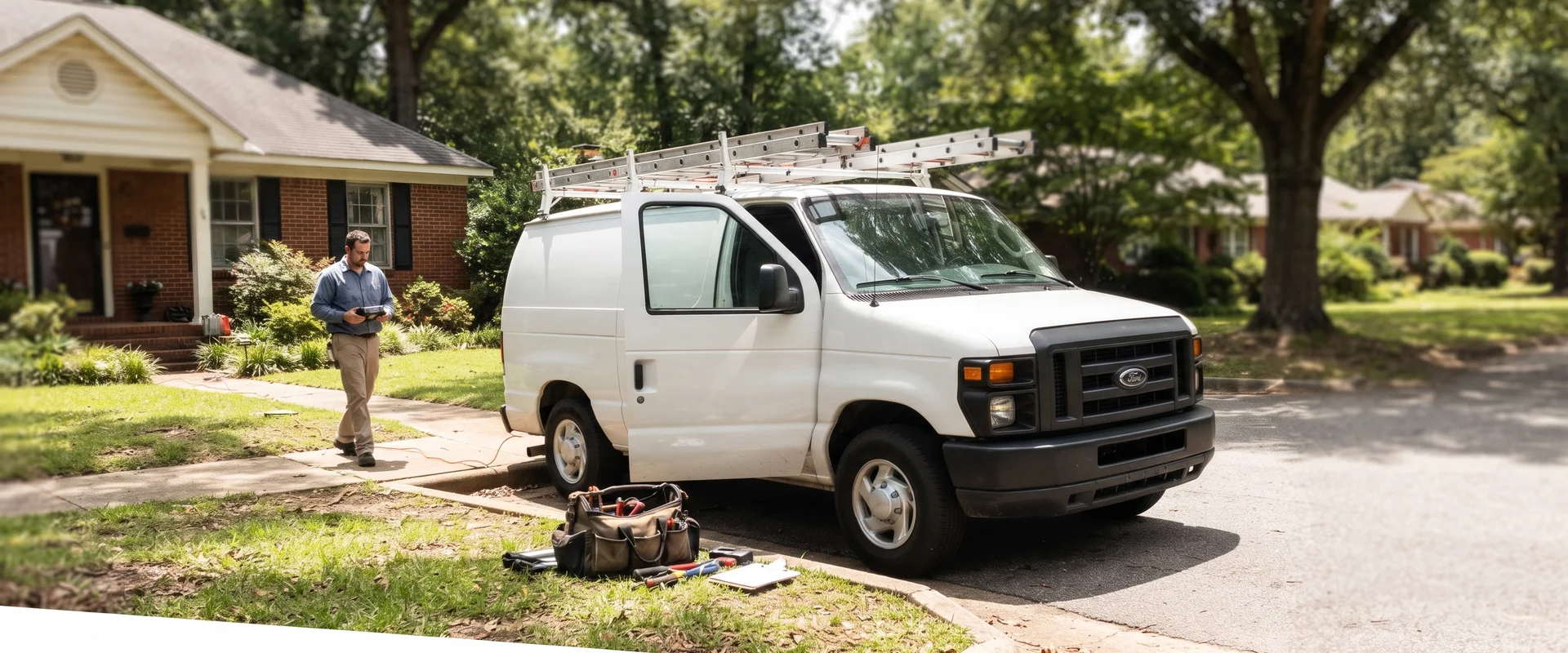
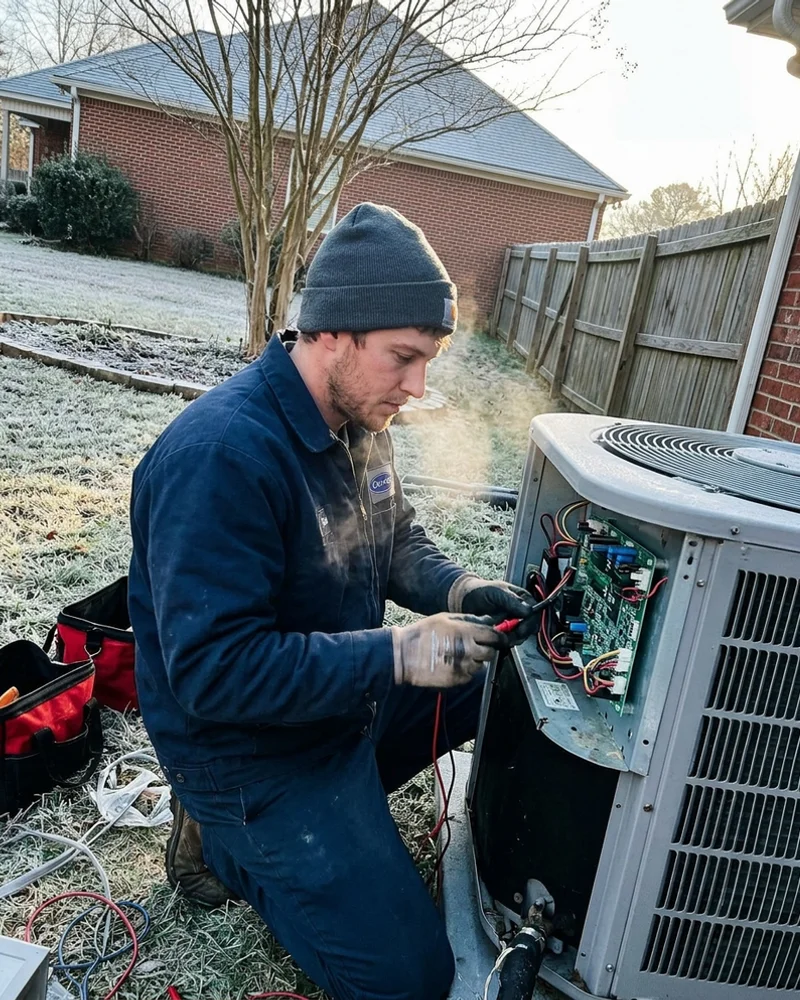
The licensed contractors we connect you with diagnose reversing-valve failures, defrost-board and sensor faults, low refrigerant, and auxiliary-heat lockouts. They also understand how a Southern heat pump behaves differently from a straight furnace: the air from the vents is warm rather than hot, the outdoor unit steams during defrost, and a brief blast of cooler air mid-cycle is normal rather than broken.
Common Problems We Solve
No heat, or cold air on heat mode
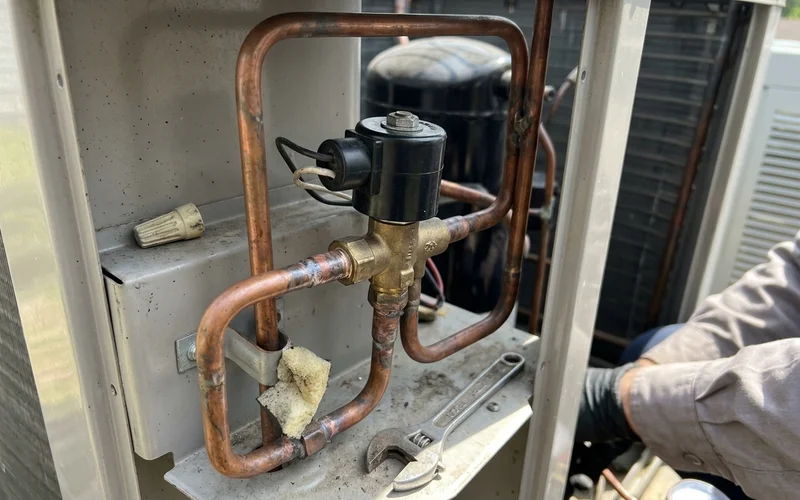
The reversing valve is the prime suspect if the system cools fine but won’t heat. Low refrigerant produces the same complaint in milder form: some heat, never enough. Both need measurement rather than guessing, because the fix and the cost differ enormously.
Outdoor unit iced over
The defrost cycle exists to melt frost off the outdoor coil. When the defrost board, the sensor, or the timing fails, ice builds until the unit can barely breathe. Light frost that clears is fine. A solid block of ice is a service call.
Aux heat running constantly
Electric heat strips are backup, not primary heat, and they cost several times more to run. If your thermostat shows aux or emergency heat on for hours at mild outdoor temperatures, the heat pump isn’t pulling its weight and something upstream is wrong.
Cooling fine, heating badly, or the reverse
A heat pump that works in one mode and not the other narrows the diagnosis considerably. It usually points to the reversing valve, its solenoid, or the control board rather than to the compressor or the charge.
Outdoor unit runs but nothing happens inside
Blower faults, control board issues, or a communication problem between indoor and outdoor units. On the coldest mornings this is the call that comes in most often, because that’s when the system is being asked to work hardest.
Cold-weather parts most homeowners never hear about
A crankcase heater keeps refrigerant from pooling in the compressor overnight during a cold snap, and a failed one can lead to a rough, damaging start the next morning. An accumulator protects the compressor from liquid refrigerant coming back from the coil, especially during defrost. Every heat pump has a balance point, the outdoor temperature below which it can no longer keep up on its own and leans on auxiliary heat, and some thermostats use an ambient temperature cutoff to lock out the heat pump and run on emergency heat mode alone below a set temperature. None of this is DIY territory, but knowing the terms helps when a contractor explains what failed.
The Cold-Snap Pattern
Alabama winters are mild on average and occasionally brutal for a week. Those cold snaps are when heat pump faults surface, and it’s not a coincidence. A defrost board that has been marginal since October works fine at 55 degrees and fails at 28. A charge that dropped slightly over the summer is invisible until the system needs every bit of capacity it has.
That’s why December through February is the heating peak for dispatch. Same-day service is available in most areas during cold snaps, and the phone is answered 24/7. If you’re in the Tennessee Valley or North Alabama, where cold snaps bite hardest, this is the season worth having a number for.
Repair Cost and What Drives It
Costs range widely. A defrost sensor or a solenoid coil is at the affordable end. A full reversing valve replacement is at the top, because it requires refrigerant recovery, brazing, evacuation, and recharge. Heat strip and sequencer replacements sit somewhere in the middle. Those are general market observations rather than our prices. The contractor gives you a free, no-obligation estimate for your specific system before doing anything.
If your system is a dual fuel system pairing a heat pump with a gas furnace as backup, the furnace repair side of the network handles that half. And if the heat pump is old enough that repeated repairs are stacking up, ask for a repair-versus-replace comparison during the same visit.