
What the Defrost Cycle Is Doing
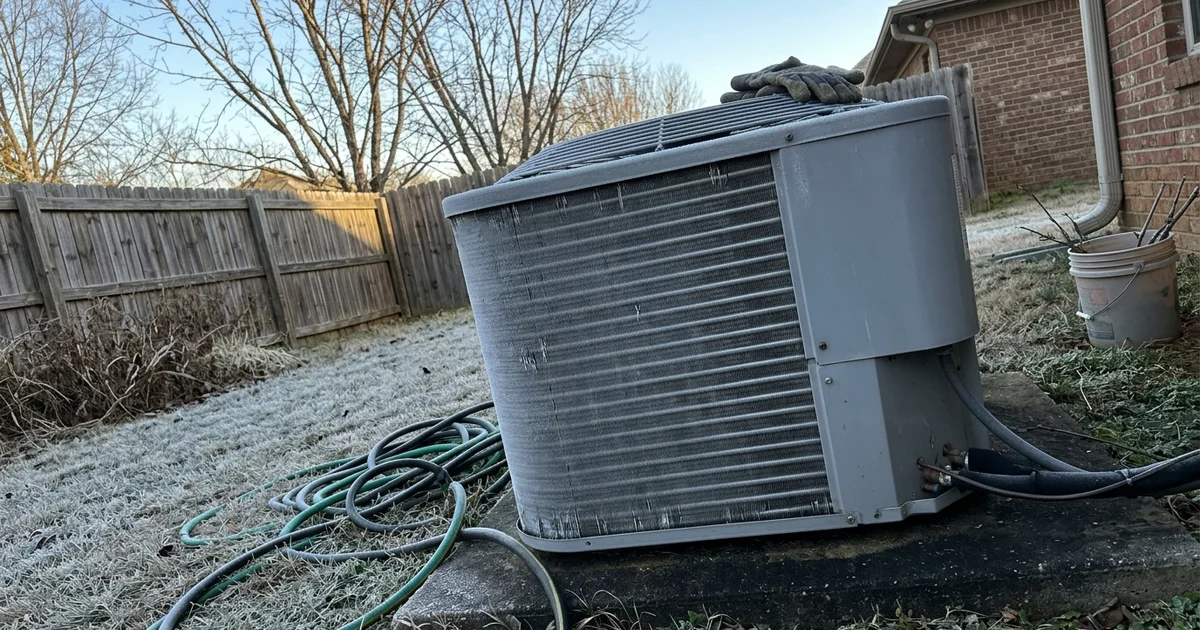
In heating mode, a heat pump extracts heat from outdoor air. That makes the outdoor coil colder than the air around it, and when the air is cold and damp, moisture condenses on the coil and freezes. Knowing what is normal here saves a lot of unnecessary calls for heat pump repair. Frost accumulates, blocks airflow through the fins, and heating capacity drops.
The defrost cycle is the built-in solution. Periodically, the system reverses itself briefly, running as an air conditioner would, sending hot refrigerant out to the outdoor coil to melt the frost. The outdoor fan usually stops during this so the heat stays where it is needed. Indoors, auxiliary heat often kicks in to offset the temporary loss of heating.
From outside, a defrost cycle looks dramatic: steam pouring off the unit, a loud whoosh as the reversing valve shifts, and water running off the coil. All of that is normal. From inside, you may notice the air feels cooler for a few minutes.
Normal Ice Versus a Real Problem
| What you see | Verdict |
|---|---|
| Light frost on the coil fins, clearing periodically | Normal |
| Steam and water running off during a cycle | Normal |
| Cooler indoor air for a few minutes, then warm again | Normal |
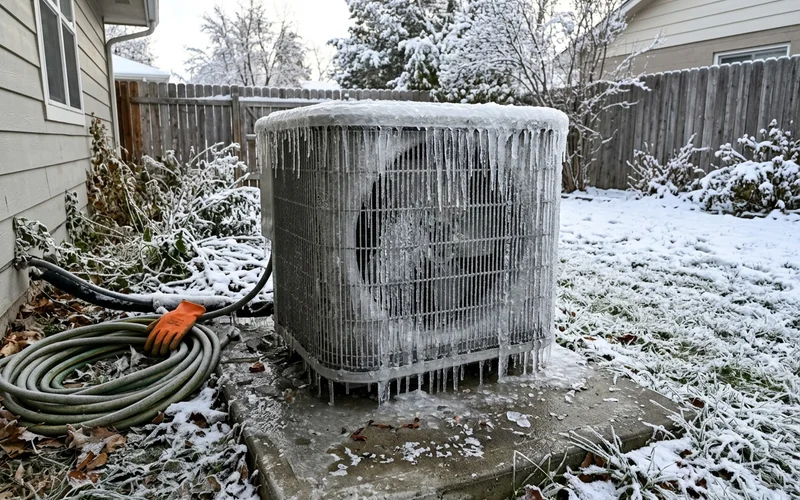
| Solid ice covering the coil that never clears | Call |
| Ice over the top fan grille or the whole cabinet | Call |
| Defrost running constantly, or every few minutes all day | Call |
| Ice at the base while the unit sits in standing water | Call, drainage issue |
The simplest test is time. Watch the unit over a couple of hours on a cold day. If frost appears, a defrost cycle runs, and the coil comes back clear, the system is doing its job. If ice accumulates through several cycles without clearing, something in the defrost chain has failed.
Do not chip it off
Coil fins and refrigerant tubing are thin. A puncture converts a defrost fault into a refrigerant leak and a much larger repair. Lukewarm water at most, or simply let it thaw.
When Defrost Fails
Four common causes. A defrost control board that has failed and no longer initiates or terminates the cycle correctly. A defrost sensor or ambient temperature sensor giving false readings, so the board makes decisions on bad information. A reversing valve that cannot shift into defrost. Or a low refrigerant charge that leaves too little heat available to clear the coil even when the cycle runs.
There is also a non-mechanical cause worth checking: drainage. If the pad has settled or the unit sits in a low spot that holds water, meltwater refreezes around the base and builds upward until it reaches the coil. That is a site problem, not an equipment problem, and it needs the base clearing and the drainage fixed.
The Alabama Pattern
Alabama winters are mild on average, which means heat pumps here often run for weeks without needing defrost at all, then face several days where they need it constantly. A defrost board that has been failing quietly since last winter reveals itself on the first hard, damp cold snap.
Frost forms most readily in the 30s with high humidity, which describes a Tennessee Valley January morning almost exactly. Gulf Coast systems see it less often but not never.
Interim step while you wait for service: switch the thermostat to emergency heat. It costs more to run, but it keeps the house warm and lets the outdoor unit thaw rather than continuing to ice up. The emergency heat guide explains the cost implications.
For a diagnosis, Heat Pump Repair connects you with a licensed local contractor who works heat pumps year round, with a free estimate before any work.