
First, Rule Out Normal Behavior
Heat pumps behave differently from furnaces, and two normal behaviors get reported as faults every winter, well before anything actually needs heat pump repair.
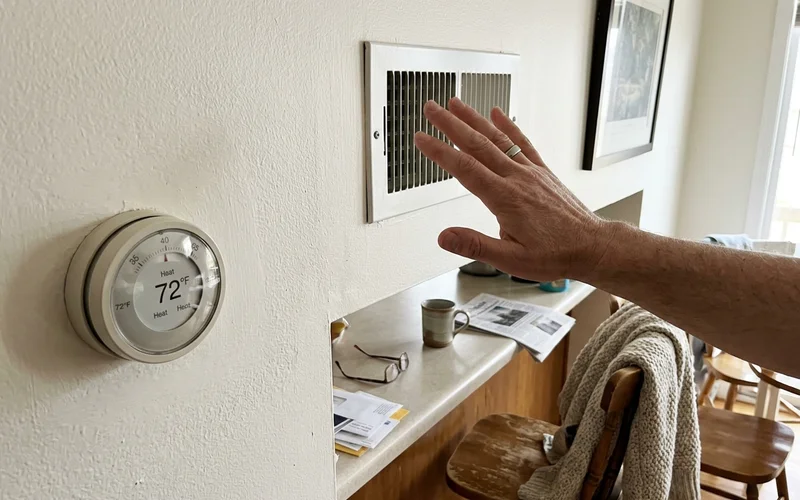
Warm rather than hot air. A heat pump delivers supply air in the range of 90 to 100 degrees Fahrenheit. That is well above room temperature and effective at heating, but it is below skin temperature, so it can feel cool on your hand. If the room temperature is climbing, the system is working.
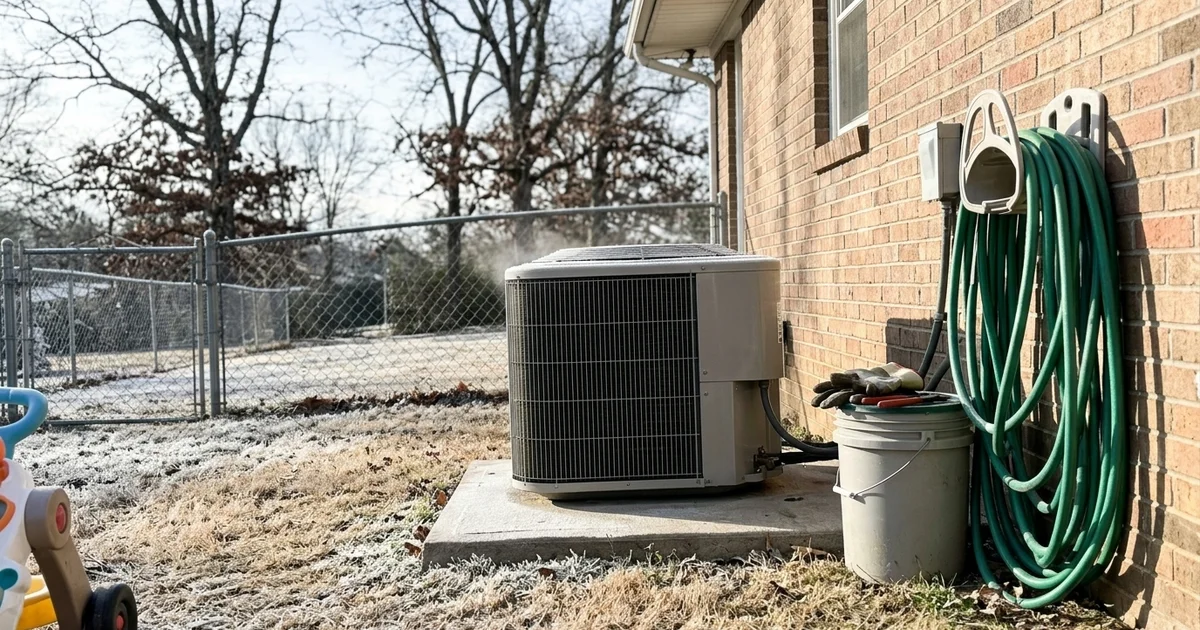
Defrost cycles. Several times an hour in cold, damp conditions, the outdoor unit reverses briefly to melt frost off its coil. During defrost you may see steam rising outside, hear a whoosh, and feel cooler air indoors for a few minutes. This is designed behavior. If it lasts a few minutes and normal heating resumes, nothing is wrong.
If neither of those explains what you are seeing, work through the real causes.
The Four Common Faults
Stuck reversing valve. The valve that switches the system between heating and cooling. When it sticks in cooling position, the system runs as an air conditioner in January, genuinely cold air, and an obvious problem. Sometimes the valve body is fine and only the solenoid coil has failed, which is a much smaller repair.
Defrost system failure. A failed defrost board or temperature sensor means the outdoor coil never clears its frost. Ice builds until airflow across the coil is choked and heating capacity collapses. The visible sign is an outdoor unit encased in ice rather than lightly frosted.
Low refrigerant. Reduces capacity in both modes, but you notice it in winter because the margin is thinner. The system runs longer, calls auxiliary heat more often, and never quite gets there.
Auxiliary heat lockout or failure. If the heat strips or their sequencers have failed, the system loses its backup exactly when it needs it. You may not notice until a genuine cold snap, since aux heat rarely runs in mild weather.
What to check yourself
Thermostat set to heat with the setpoint above room temperature. Filter clean. Breakers on, heat pumps often have separate breakers for the outdoor unit and the heat strips, and a tripped strip breaker leaves you with a heat pump but no backup.
Why Alabama Cold Snaps Expose These
Our heating season is short and intense. Equipment idles through a mild fall, then gets asked to run flat out for a week when a front pushes down from Tennessee. Faults that were dormant become obvious overnight, across whole counties at once.
That is also why call volume spikes during those weeks and why calling early in the day matters. Same-day service is available in most areas, and the phone is answered 24/7, but the queue on the first hard freeze of the year is real.
North Alabama feels this most. In Cullman, Athens, and Decatur, cold snaps bite harder and last longer, and heat pumps there work closer to their limits than systems on the Gulf Coast do.
What a Technician Checks
The diagnosis runs mode by mode. They verify the thermostat call, confirm the reversing valve is energizing and shifting, force a defrost cycle to check the board and sensor, measure refrigerant pressures in heating mode, and test the aux heat circuit including sequencers and limit switches.
That sequence separates a stuck valve from a defrost fault from a charge problem, and the three have very different costs. You get a free, no-obligation estimate before anything is replaced.
If your aux or emergency heat has been running constantly, the emergency heat guide explains what that means for your bill. For a diagnosis, Heat Pump Repair connects you with a licensed local contractor.