When Replacement Beats Repair
There comes a point where another repair stops being the sensible choice. The licensed contractors we connect you with provide free, no-obligation quotes for central AC replacement and new-system installation, and they will tell you plainly when a repair still makes more sense than a changeout.
The rough test most homeowners use is age against repair cost. A system over ten to fifteen years old, facing a repair worth roughly half the price of a new unit, is usually past the point of good money after bad. In Alabama, two extra factors weigh in. Runtime here is brutal, four to five months of near-continuous cooling, so systems age faster than the national average. And R-410A refrigerant costs keep climbing as the phase-out progresses, which makes repeated leak repairs on an older system an expensive habit. If that phase-out is the part making you hesitate, our explainer on what the R-410A refrigerant phase-out means for Alabama homeowners covers what actually changed and what it does not affect.
Sizing for a Humid Climate
The single biggest mistake in Alabama system replacement is oversizing. It feels intuitive, hotter climate, bigger unit, and it is wrong. An oversized air conditioner satisfies the thermostat quickly and shuts off before it has run long enough to pull moisture out of the air. The result is a house that reads 74 on the thermostat and still feels damp, plus short cycling that wears out the compressor.
A Manual J load calculation solves this. The contractor measures the home, accounts for insulation, window area and orientation, ceiling height, and local design temperatures, then sizes the equipment to the actual load. Sometimes that means the same tonnage, or BTU capacity, you had. Sometimes it means less, especially if windows or insulation have been upgraded since the original install. Either way, it is a calculation rather than a guess, and the outdoor unit and indoor coil should come as a matched, AHRI certified pair so the rated efficiency actually holds up in the field.
Efficiency, SEER2, and What It Costs to Run
SEER2 is the current efficiency standard, and Alabama sits in the Southeast region with its own minimum. Every new system installed here meets that floor. Above it, you are buying down your operating cost: a higher-efficiency system costs more upfront and less to run, and the payback depends on how many hours a year it runs. In a climate with a five-month cooling season, that math works out better than it does further north.
A variable-speed air handler paired with an inverter-driven compressor is worth a specific mention here. Running longer at lower capacity pulls more moisture out of the air, which is exactly what a humid Alabama home needs, and it is the equipment most likely to be marketed as a high-efficiency upgrade over a standard single-stage system. If clammy indoor air has been a recurring complaint, say so during the quote, it may change the equipment recommendation more than the SEER2 rating alone does.
Financing, Rebates, and Second Opinions
An Alabama Power rebate or a TVA EnergyRight incentive has covered part of the cost for some homeowners in the past, and many contractors offer financing on replacement too. Programs change from year to year, so rather than promising a number, the contractor confirms what actually applies to your utility and your equipment during the free quote.
If you have already been quoted a full replacement somewhere else and it felt premature, get a second opinion. It happens more often than it should that a condemned system turns out to need a capacitor or a contactor. Because the estimates here are free and there is no referral fee, a second look costs you nothing but the time.
What the Install Day Looks Like
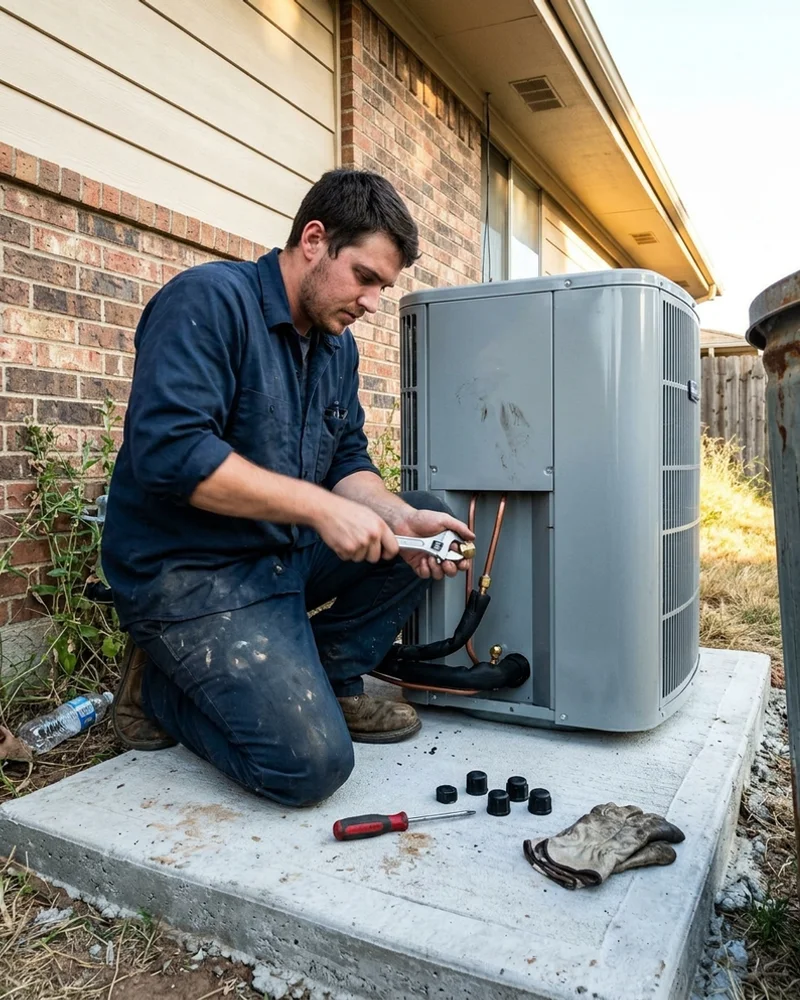
A straight changeout is usually a single day. The old equipment comes out, the new condenser and matched indoor coil go in, the line set is evacuated and charged properly, and the system gets commissioned, charge verified, airflow measured, thermostat configured, warranty registered. Ductwork changes, a duct plenum transition to fit a differently sized new air handler, electrical upgrades, or awkward attic access add time, and your contractor will flag that in the quote rather than on the day.
Whether you are replacing a failed system or planning ahead before next summer, start with the free quote. If you are still weighing whether to fix what you have, the AC repair side of the network can diagnose it first and give you both numbers.