
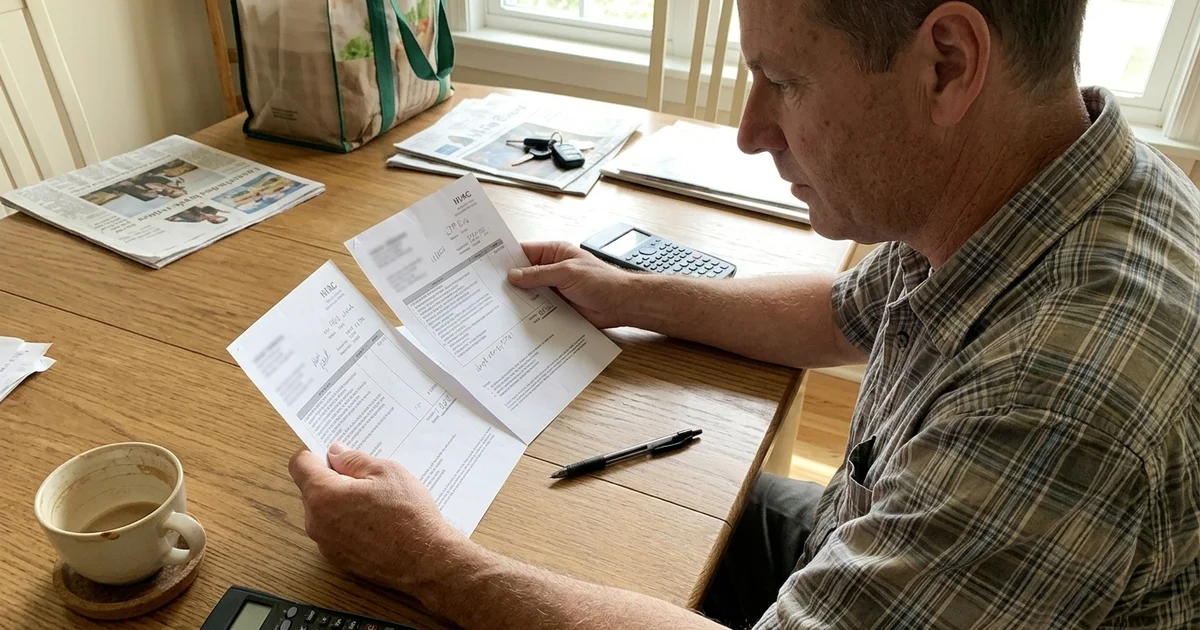
When a Second Opinion Is Worth the Hour
Not every quote for AC installation and replacement needs checking. If your system is nineteen years old, has needed three repairs this summer, and the coil is visibly corroded, a replacement recommendation is almost certainly right.
The situations where a second look pays are more specific:
- The quote arrived after a short visit with little testing described
- You were told the compressor is dead but the unit was humming rather than silent
- The system is under twelve years old and had no prior history of problems
- You were pressured to decide the same day
- The number is much larger than you expected and nothing was itemized
- The diagnosis was “it’s old” rather than a named failed component
Any one of those is enough reason to get another set of eyes on it. All of them together is close to an obligation to yourself.
What Gets Over-Condemned
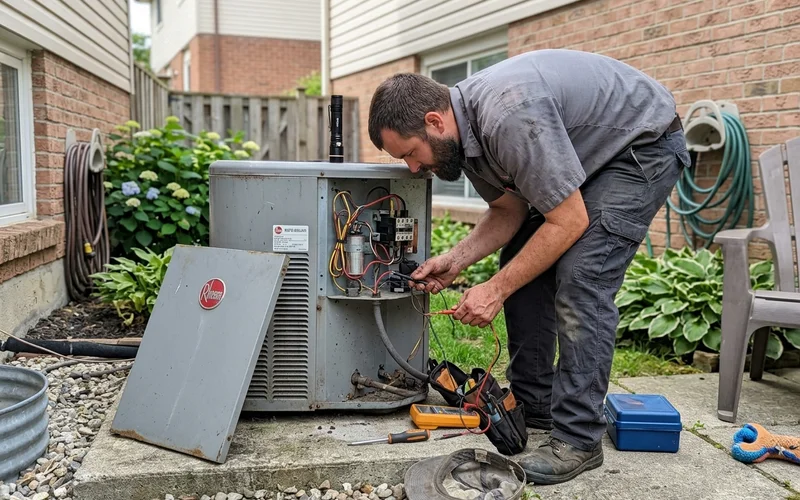
The single most common one is the capacitor. A weak or failed run capacitor produces a humming outdoor unit that will not start, which is exactly what a seized compressor looks like from three feet away. The difference in cost between the two repairs is enormous, and the difference in testing effort is about thirty seconds with a meter.
Contactors are second. A pitted or welded contactor stops the compressor being energized properly, again presenting as a dead system.
Third is a system condemned for low refrigerant. Low charge means a leak, and a leak sometimes means an expensive coil replacement, but it can also be a serviceable fitting or an accessible line joint. “It is low on refrigerant so you need a new system” skips several steps.
The question that settles it
“What test did you perform to confirm that, and what reading did you get?” A technician who measured will answer with a number. That answer, or its absence, tells you whether a second opinion is warranted.
What a Good Second Opinion Involves
The second contractor should test rather than take the first diagnosis at face value. That means checking the capacitor under load, inspecting the contactor, verifying voltage at the disconnect, reading refrigerant pressures, checking the compressor’s electrical characteristics, and looking at the coil condition and equipment age.
Then one of three things happens. They find a cheaper fixable fault, and you avoid a large purchase. They confirm the original diagnosis, and you proceed knowing it was checked. Or they agree the system needs replacing but quote it differently, which gives you a genuine price comparison on the same job.
All three outcomes are worth having. The worst outcome is spending a large sum on a guess.
Comparing the Quotes You End Up With
If you finish with two replacement quotes, compare like for like. Check equipment model and SEER2 rating, whether a load calculation was performed and what size it produced, whether the indoor coil and line set are included, warranty terms for parts and labor, permit handling, and whether commissioning is included.
Quotes that differ by a lot usually describe different jobs. Once you have them lined up properly, the decision is straightforward.
If your quote hinged on a dead compressor, read the capacitor vs compressor guide first, it covers exactly what should have been tested. For how replacement pricing is built in the first place, the AC replacement cost guide breaks it down. For a second free quote on your system, AC Installation & Replacement connects you with a licensed local contractor, with no referral fee to you.