Why a Tune-Up Pays for Itself Here
A pre-summer tune-up is the cheapest way to avoid a July breakdown. Alabama systems run harder and longer than systems almost anywhere else in the country: five months of heavy cooling, high humidity the whole time, and pollen loads in spring that clog filters faster than most homeowners expect.
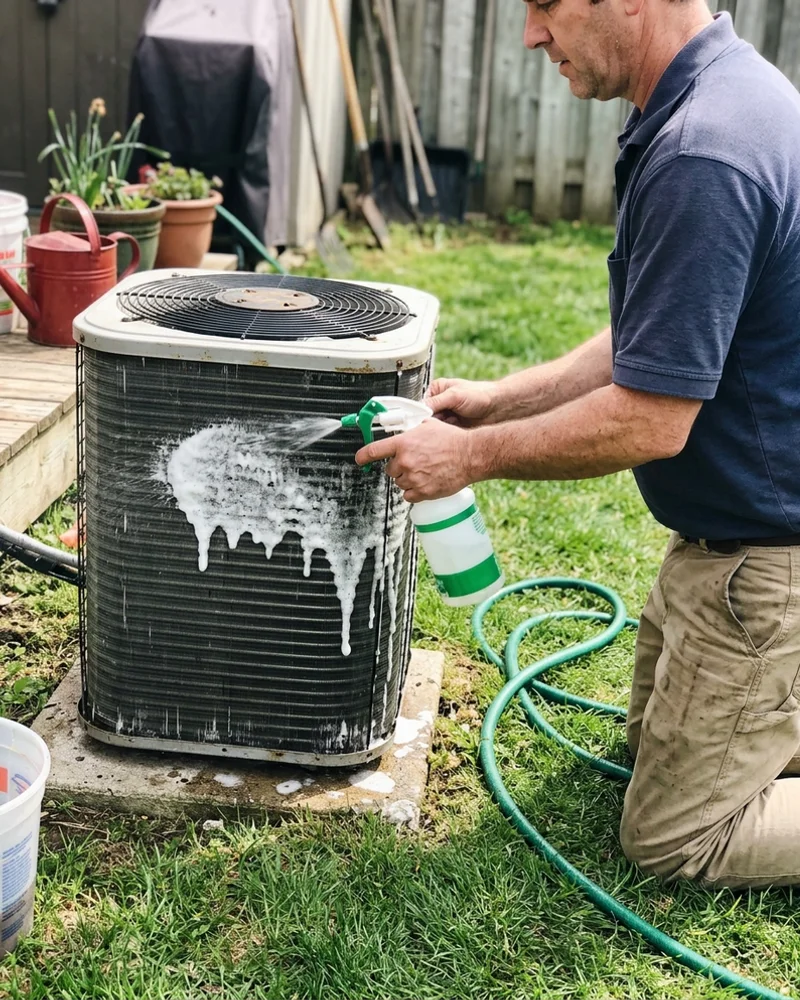
The licensed contractors we connect you with handle condenser coil cleaning, sometimes with a chemical fin wash for a unit caked in pollen and grass clippings, check the refrigerant charge, inspect the filter and thermostat, measure delta T (the temperature split across the coil), and flag worn parts before they fail during peak heat. Regular maintenance protects the compressor, keeps electric bills in check, and helps a system reach the top of its expected lifespan rather than the bottom.
What Gets Checked
Airflow side
Filter condition first, checked against its filter MERV rating, then the evaporator coil, the blower wheel, and the return path. A full blower assembly cleaning clears out the dust and biofilm that build up on the wheel in humid climates. Restricted airflow is behind most frozen coils and a surprising share of “my AC isn’t cooling like it used to” complaints. A dirty blower wheel alone can cost you a meaningful chunk of your system’s capacity, and a static pressure reading confirms whether the whole duct system is breathing properly.
Refrigerant side
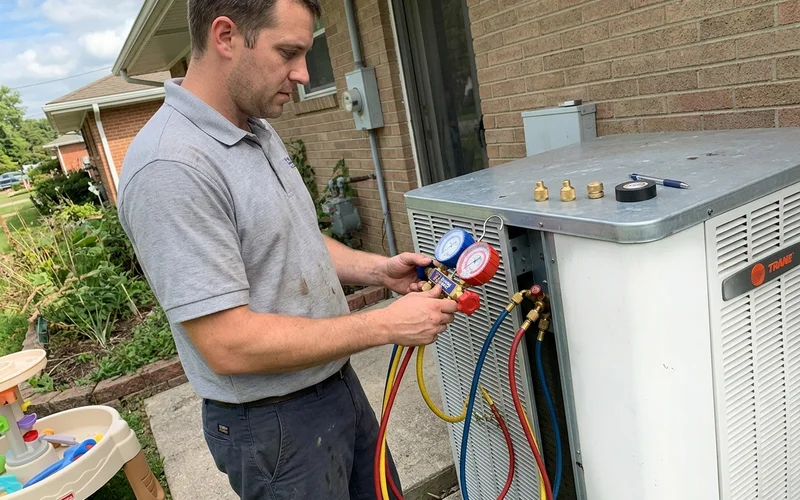
Refrigerant subcooling and superheat get measured rather than assumed. A charge that has drifted low points to a leak, and finding it in spring is far better than discovering it during a heatwave when the system can no longer keep up.
Electrical side
Capacitor condition, contactor surface, an amp draw measurement on the compressor and fan motors, and the tightness of every terminal. This is where a tune-up earns its keep: a capacitor reading low in April is a scheduled, inexpensive replacement instead of an emergency call in August.
Water side
The condensate drain, the pan (sometimes with an algae condensate pan treatment to slow the next clog), and the float switch. In Alabama humidity, an air handler pulls gallons of water out of the air every day. When the drain clogs, that water goes somewhere, and in attic installations it goes through your ceiling.
Homeowner Maintenance Between Visits
There is real work you can do yourself. Change the filter on schedule, every one to three months for a 1-inch filter, three to six for a thicker pleated one, shorter with pets or heavy runtime. Keep grass, mulch, and shrubs at least a couple of feet back from the outdoor unit so it can breathe. With the power off at the disconnect, rinse the condenser fins gently with a garden hose to clear pollen and grass clippings. Keep supply and return registers unblocked by furniture and rugs.
What stays with the technician: refrigerant work of any kind, electrical components, chemical coil cleaning, and anything requiring the unit to be opened. Capacitors hold a charge even after the power is off.
Timing and Maintenance Plans
Book in early spring. By late May, schedules across the state fill with emergency calls, and a routine tune-up becomes hard to slot in. If you run a heat pump, consider two visits a year, spring and fall, because the equipment carries both seasons and racks up far more hours than a cooling-only system.
A maintenance agreement from an individual contractor typically bundles one or two visits, a repair discount, and priority scheduling. In a state where a July breakdown can mean a genuine wait, that priority slot is often the most valuable part. Ask what’s actually included before you sign, and compare it against simply booking a tune-up each spring.
If your system is already struggling, maintenance is not the fix. Start with AC repair so the underlying fault gets diagnosed first, then keep it healthy from there.