
The Physics, in Plain Terms
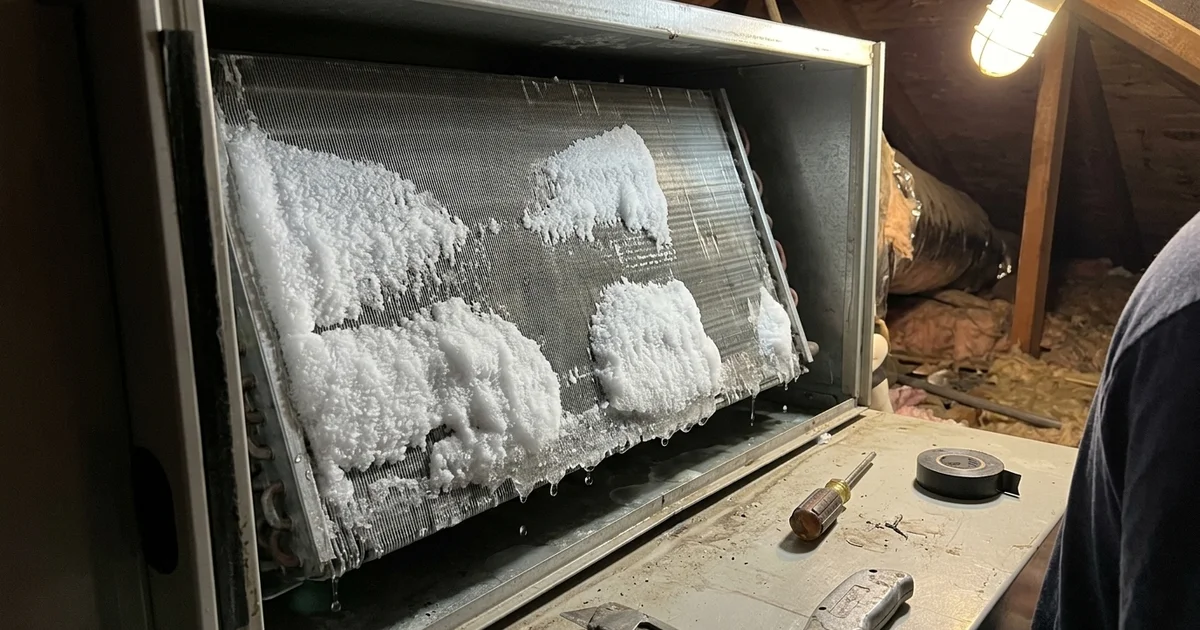
An evaporator coil is designed to run cold but above freezing, typically in the 40s Fahrenheit, and keeping it there is most of what AC tune-up and maintenance is for. Warm indoor air passes over it, heat transfers into the refrigerant, and moisture condenses out and drains away. That balance holds as long as the airflow and the refrigerant charge are both correct.
Break either one and the coil surface drops below 32 degrees. Condensation freezes instead of draining, frost accumulates, and the frost blocks the airflow that was already inadequate. The process accelerates until the coil is a block of ice.
Two causes, then. Restricted airflow, or low refrigerant charge. Everything else is a version of one of those.
The Airflow Half
Filters are the most common culprit and the easiest to fix. A filter that has not been changed in six months during an Alabama cooling season is restricting airflow substantially.
Dirty evaporator coils are the culprit homeowners cannot see. Over years, dust and biofilm build up between the fins, insulating the coil and narrowing the air passages. Filters slow this but do not prevent it, and in humid climates it happens faster because damp dust adheres.
Blower problems, a dirty blower wheel, a failing motor, or a belt issue on older systems, reduce the volume of air moving across the coil.
Duct issues including crushed flex runs, disconnected sections, closed registers, and undersized returns all reduce airflow at the coil regardless of how clean the filter is.
The Refrigerant Half
Refrigerant does not get consumed. A sealed system holds its charge indefinitely unless something leaks. So when a technician finds a low charge, the correct response is to find the leak, not simply top it up.
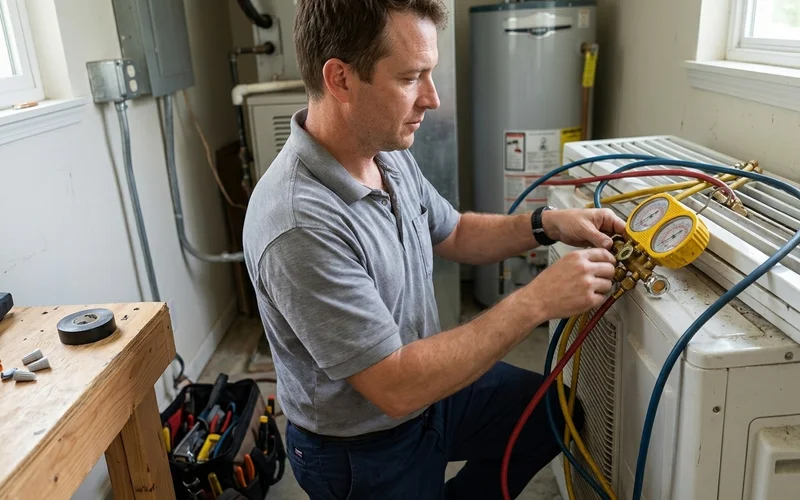
Low charge lowers pressure in the evaporator, which lowers the refrigerant’s boiling temperature, which drops the coil below freezing even with perfect airflow. It also means reduced capacity, so the system runs longer and longer trying to reach setpoint, more runtime at a colder coil temperature, which makes freezing more likely still.
Repeated top-ups without leak repair is the single most expensive maintenance habit in residential HVAC, and it has become more expensive as R-410A prices rise through the phase-out.
The tell for a leak
A system that freezes, gets thawed, works for a few weeks, then freezes again with a clean filter is almost always losing refrigerant.
What Maintenance Actually Prevents
An annual tune-up addresses both halves directly. Coil cleaning restores airflow and heat transfer on the surface homeowners cannot reach. Filter inspection catches a restriction before it causes ice. Static pressure measurement identifies duct and blower problems that no amount of filter changing will fix. And measured refrigerant pressures reveal a charge that has drifted low while there is still time to find the leak calmly rather than during a heatwave.
That last point matters. A leak found in March is a scheduled repair. The same leak found in August is a system that froze, thawed into your ceiling, and needs emergency service.
The Alabama Multiplier
Long runtime means more hours at risk. High humidity means more moisture available to freeze and faster coil fouling. Heavy pollen loads clog filters faster than anywhere most people have lived before. And on the coast, salt-air corrosion produces the pinhole leaks that cause low charge in the first place.
None of that changes the physics. It just means the margin between “working fine” and “frozen solid” is narrower here, and maintenance buys back that margin.
If your coil is iced up right now, go to the frozen AC coil guide for safe thawing steps. Since a restricted filter is the most common trigger, the filter change guide is worth reading alongside this. To prevent the next one, AC Tune-Up & Maintenance connects you with a licensed local contractor for a seasonal check.