
The Actual Schedule
Filter intervals printed on packaging assume average conditions, and Alabama is not average. Here is a realistic schedule for this climate, and it is the one homeowner task that does the most between professional AC tune-up and maintenance visits.
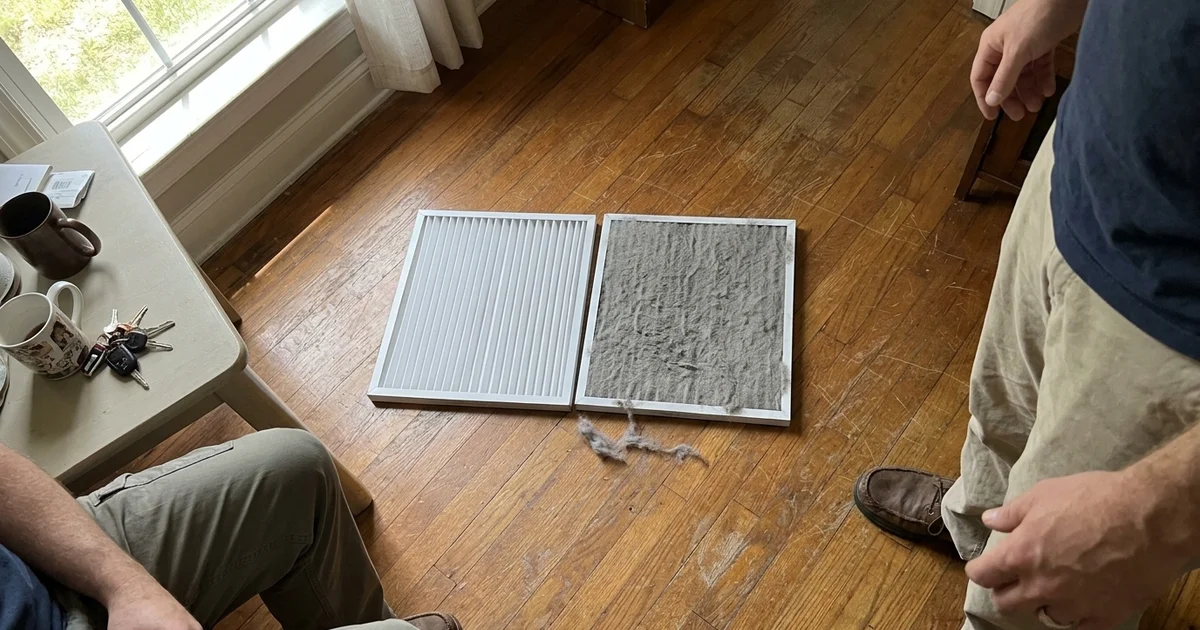
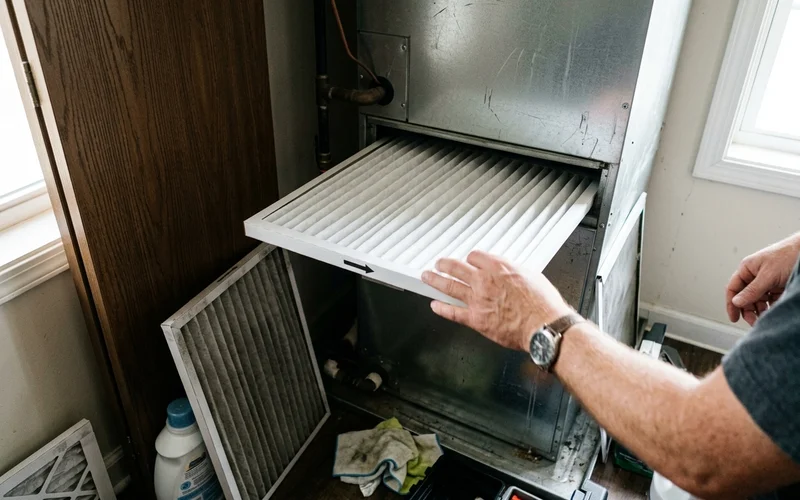
Standard 1-inch filters: every one to three months. Monthly during heavy runtime, spring pollen season, or if you have pets. Three months is the outside limit, not the default.
Thicker 4- to 5-inch media filters: every three to six months. These have far more surface area, so they load more slowly, but they still need checking.
Washable filters: rinse monthly and dry completely before reinstalling. A damp filter in humid Alabama air is an invitation for microbial growth.
The reliable method is not a calendar reminder but a look. Pull the filter, hold it up to a light, and if you cannot see light through it, replace it regardless of what the schedule says.
MERV Ratings, Briefly
MERV stands for Minimum Efficiency Reporting Value. Higher numbers capture smaller particles. That sounds like a straightforward “higher is better,” and it is not.
MERV 1 to 4. Basic fiberglass. Protects the equipment, does almost nothing for air quality.
MERV 5 to 8. Captures pollen, dust mite debris, and mold spores. A reasonable baseline.
MERV 9 to 12. Adds finer dust and pet dander. This is the sweet spot for most Alabama homes, particularly for allergy sufferers.
MERV 13 and above. Captures very fine particles including some bacteria. Genuinely effective, and genuinely restrictive, many residential systems were not designed for the pressure drop, and installing one can reduce airflow enough to cause the problems you were trying to avoid.
The practical guidance: MERV 8 to 11 for most homes. If you want higher filtration for allergy reasons, ask your contractor whether your system’s blower and duct sizing can support it, or consider a thicker media cabinet that provides high filtration with more surface area and less resistance.
Higher MERV is not free
Every increase in filtration is an increase in resistance. Match the filter to what your system can move, not to the highest number on the shelf.
Why Alabama Filters Load Faster
Three reasons stack up. Runtime is the first: a system operating most of the day for five months pulls far more air through the filter than one running intermittently. Pollen is the second, spring in Alabama coats everything, and a filter installed in February can be grey by April. Humidity is the third, since damp dust mats more readily than dry dust and blocks a filter faster.
Add pets and the interval shortens again. A household with two dogs and a five-month cooling season is a monthly-filter household, full stop.
What Neglect Actually Causes
The chain is predictable. Restricted airflow means less warm air across the evaporator coil. The coil runs colder than designed. Moisture on the coil freezes rather than draining. Ice accumulates and blocks airflow further. Eventually the system is running against a solid block of ice, liquid refrigerant reaches the compressor, and a five-dollar filter has cost you the most expensive part in the system.
Short of that, a restricted filter raises your power bill every month it stays in, because the blower works harder and the system runs longer for the same result.
If your coil has already frozen, the frozen AC coil guide explains how to thaw it safely, and the why AC coils freeze guide covers the maintenance that prevents a repeat. For a full seasonal check, AC Tune-Up & Maintenance connects you with a licensed local contractor.