
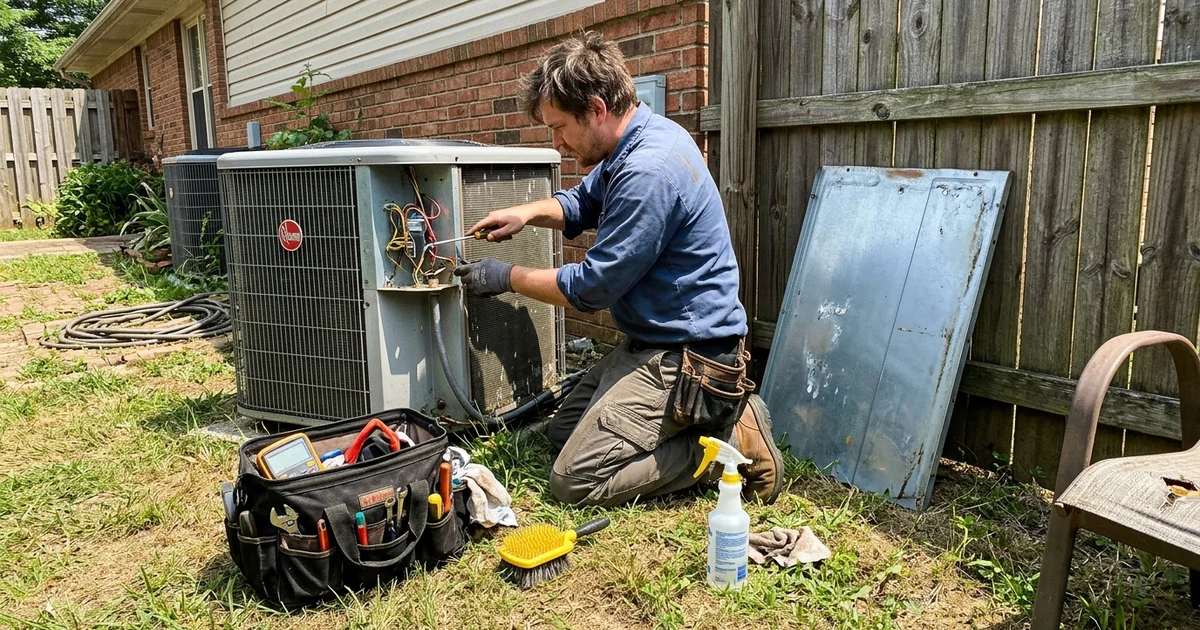
What You Are Actually Buying
An HVAC maintenance plan is a service agreement with a specific contractor, and it usually bundles the same work a one-off AC tune-up and maintenance visit covers. Typical inclusions:
- One or two scheduled tune-up visits per year
- A discount on repairs, commonly in the 10 to 20 percent range
- Priority scheduling ahead of non-members during busy periods
- Sometimes waived or reduced diagnostic fees
- Occasionally a small loyalty credit toward future equipment
What is almost never included: parts, major repairs, refrigerant, or replacement equipment. A maintenance plan is not a warranty and not insurance. It is prepaid maintenance with some service perks attached.
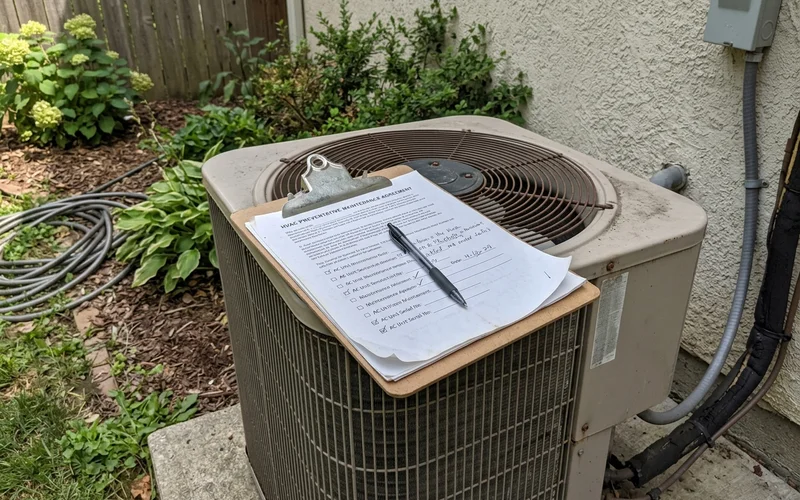
The Alabama Math
The value case here is stronger than in most of the country, for two reasons.
The first is runtime. A system running five months of the year accumulates wear fast, and preventive visits catch more because there is more to catch. Capacitors weaken, coils foul, drains clog, and charges drift, all on an accelerated schedule compared with milder climates.
The second is scheduling. During a genuine Alabama heatwave, systems across a whole county fail on the same afternoon, and contractors triage. Priority access on those days is worth something real, and it is the part of a maintenance plan that homeowners tend to value most after they have needed it once.
Against that, the honest counterweight: if the plan costs substantially more than simply booking the tune-ups individually, you are paying a premium for the discount and the priority slot. Whether that trade is good depends on your system’s age and your tolerance for waiting in July.
The comparison to actually run
Plan price for the year, versus the price of the same number of standalone tune-ups from the same contractor. The difference is what you are paying for discounts and priority. Decide whether that number is worth it to you.
What to Check Before Signing
Visit count. One or two per year? For a heat pump carrying both seasons, two is the sensible number.
What each visit includes. Ask for the checklist. A visit that measures refrigerant pressures, static pressure, capacitor values, amp draw, and temperature split is worth far more than one that swaps a filter and leaves.
Discount terms. What percentage, on parts, labor, or both, and are there exclusions?
Priority definition. Does priority mean same-day, next-day, or simply ahead of non-members? Vague language here is worth pinning down.
Transferability. If you sell the house, does the plan transfer or vanish?
Renewal and cancellation. How does it renew, how do you cancel, and is the price locked?
Who Benefits Most
Owners of systems in the eight-to-fifteen-year window get the most from a plan, because that is the age where components start weakening and catching them early has the highest payoff.
Coastal homeowners in Baldwin County benefit for a different reason: salt-air corrosion is progressive, and regular inspection catches coil deterioration and electrical corrosion before it produces a failure.
Owners of brand-new systems get the least immediate value, though many manufacturer warranties require documented annual maintenance, which makes a plan a convenient way to keep that paperwork straight.
And owners of systems approaching the end of their life should think carefully. Money spent on a plan for a seventeen-year-old system might be better saved toward the replacement that is coming anyway. The AC lifespan guide covers how to judge where yours sits.
Whichever way you go, the maintenance itself is what matters, and the pre-summer tune-up checklist shows what a good visit should cover. AC Tune-Up & Maintenance connects you with a licensed local contractor, with or without a plan attached.