
The Realistic Number
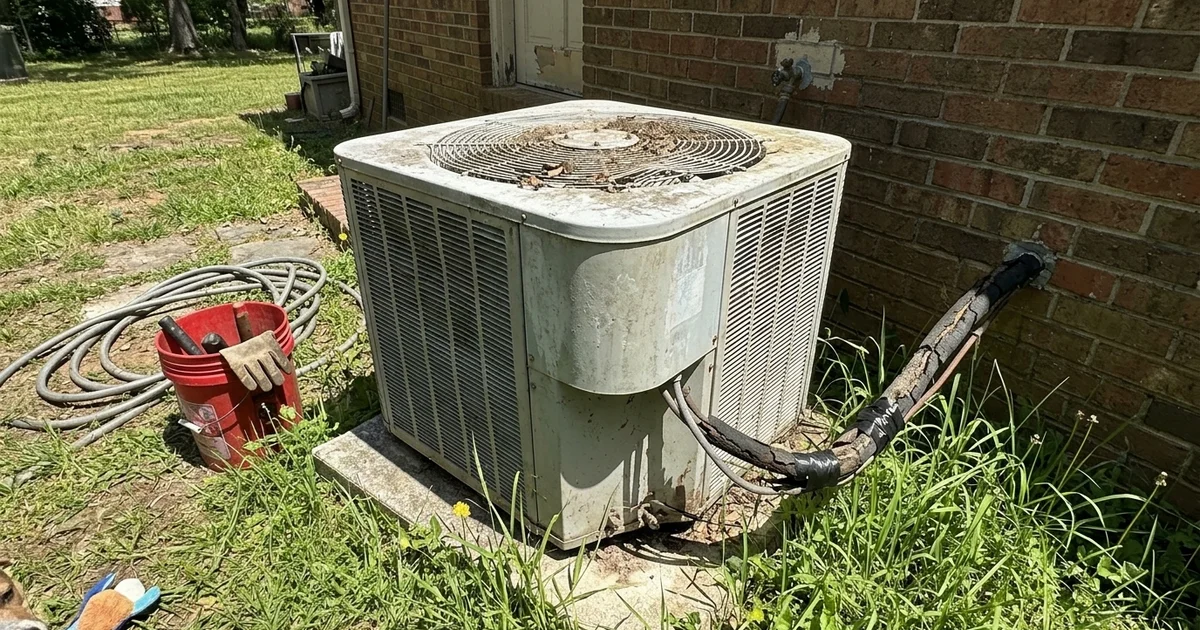
Twelve to seventeen years is the honest range for a residential air conditioner in Alabama, and past that point the calls shift from AC repair toward replacement. National figures often quote fifteen to twenty. The gap is not manufacturers being optimistic; it is climate.
An air conditioner in Alabama runs from roughly April into October, and through the peak of that it runs for most of every day. That is far more operating hours per calendar year than the same unit would accumulate in Ohio or Oregon. Since compressors and motors wear on hours rather than birthdays, our systems age faster in real terms even when nothing goes wrong.
Where a given system lands in that range depends on four things: how many hours it runs, whether the airflow and refrigerant charge stayed correct, whether it sits in salt air, and whether anyone maintained it.
What Shortens It
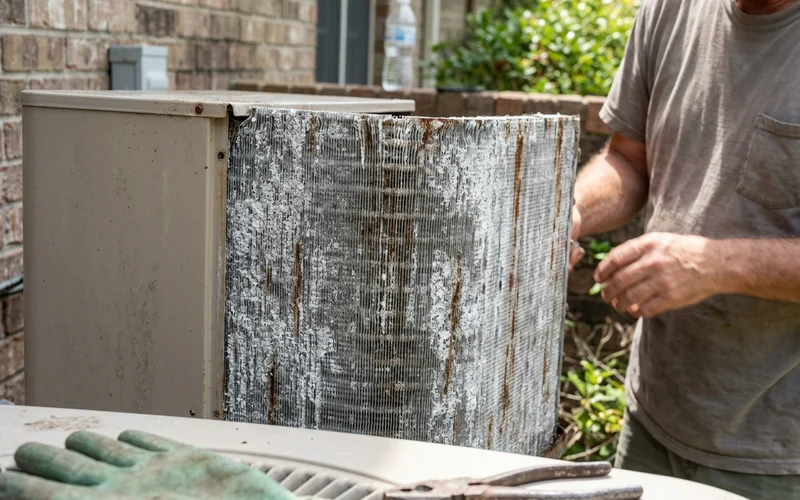
Salt air. Along Mobile Bay and down toward Gulf Shores, salt corrodes coil fins and tubing. Corrosion leads to pinhole leaks, leaks lead to low charge, and a compressor running low on refrigerant runs hot. Coastal systems in Baldwin County commonly reach ten to thirteen years rather than seventeen.
Neglected filters. The cheapest failure mode there is. A restricted filter reduces airflow, the coil freezes, and liquid refrigerant reaches the compressor. That is a five-dollar problem causing a four-figure one.
Unrepaired leaks. Topping up refrigerant year after year rather than finding the leak means running a system slightly starved every summer. It works, until it does not.
Oversizing. An oversized system short cycles, and every extra start is disproportionate wear on the compressor. It also fails to dehumidify properly, which is why oversized units in Alabama produce complaints about clammy air alongside their reliability problems.
Heavy rental or vacation use. Properties around Gulf Shores and student rentals in Auburn run thermostats low with doors opening constantly. That is the hardest duty cycle a residential system sees.
The number that matters more than age
How much you have spent on it in the last two years. A twelve-year-old system with no repair history is in better shape than a nine-year-old one that has needed refrigerant three summers running.
What Extends It
Annual maintenance before cooling season is the single biggest lever. Clean coils, correct charge, a clear drain, and tight electrical connections keep the system operating in the conditions it was designed for. Beyond that: change filters on a real schedule rather than the one on the box, keep two feet of clearance around the outdoor unit, and rinse the condenser coil with fresh water a few times a season if you live near the coast.
Fix leaks rather than topping them up. Get airflow problems diagnosed properly instead of assuming the system is “just old.” And when replacement time does come, insist on a load calculation so the next system is sized correctly for the house rather than for the last unit’s nameplate.
Reading the Signs of End of Life
A system approaching the end usually tells you. Cooling capacity drops so the house takes longer to reach temperature on hot days. Power bills creep up year over year with no change in habits. Repairs cluster, two or three in a season rather than one every few years. Humidity control gets worse. And on a coastal unit, the outdoor coil looks visibly corroded, with white oxidation and crumbling fins.
None of those on their own mean replace it tomorrow. Together, on a system past twelve years, they mean it is time to get both numbers, the cost of this repair, and the cost of a new system, before deciding. The repair vs replacement guide walks through that decision properly.
If your system is struggling right now, AC Repair connects you with a licensed local contractor who can diagnose it and quote both options, free and with no obligation.