
The Rule of Thumb, and Its Limits
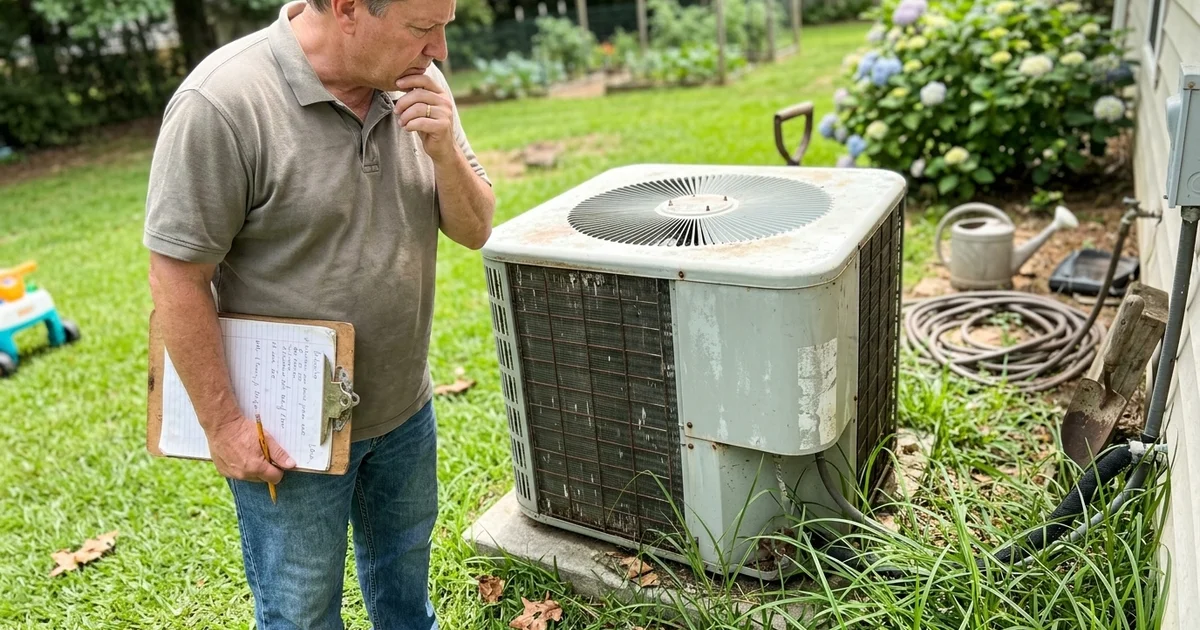
The version most contractors use: if the system is more than ten to fifteen years old and the repair costs about half what a new system would, replace it. It is a decent starting point for deciding between AC repair and a full replacement, and it is not the whole picture.
The reason it works is that repair spending on aging equipment does not buy you a reset. Fixing a compressor on a fourteen-year-old system leaves you with a fourteen-year-old system that has a new compressor and every other original part still aging. The next failure is not a coincidence, it is a queue.
The reason it is incomplete is that it ignores three things that matter a lot in Alabama: how the system has been performing generally, how often it has needed attention lately, and what the refrigerant situation adds to the arithmetic.
The Full Decision Framework
| Factor | Points toward repair | Points toward replacement |
|---|---|---|
| System age | Under 10 years | Over 12 to 15 years |
| Repair cost | Small share of a new system | Approaching half a new system |
| Repair history | First issue in years | Second or third call this season |
| Refrigerant | Charge holding, no leaks | Recurring R-410A leaks |
| Comfort | Cools and dehumidifies well | Struggles on hot days, house feels damp |
| Power bills | Steady year over year | Climbing without a change in habits |
| Sizing | Sized correctly for the home | Known oversized, short cycles constantly |
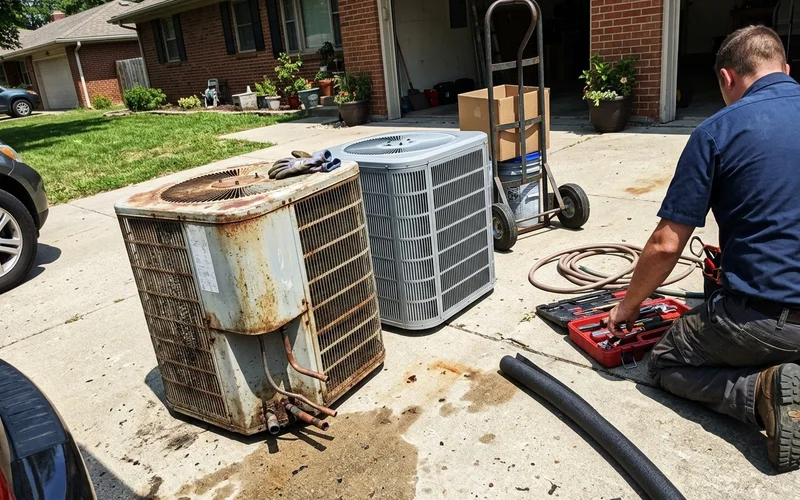
If most of your answers land in the left column, repair. If most land in the right, get a replacement quote and compare it properly. A mixed picture usually means repair now, plan for replacement in the next year or two, and use the time to budget rather than being forced into a decision during a heatwave.
What the Refrigerant Change Adds
New residential equipment now ships with A2L refrigerants such as R-454B rather than R-410A. Your existing R-410A system is not affected legally, it stays serviceable, and repairs continue normally.
What is affected is cost. As R-410A production winds down, the price of what remains drifts up. A single top-up after a properly repaired leak is not a big deal. Repeatedly recharging a system that leaks is a different matter, and it is the specific scenario where the refrigerant change genuinely tips the decision.
Careful with the pressure sell
“Your refrigerant is being banned” is not an accurate description of a working system. Anyone using it to rush you into a same-day replacement decision is worth a second opinion.
The Alabama Weighting
Two local factors change the math compared with national advice.
Runtime is the first. A system in Alabama accumulates operating hours faster than the national average, which means a twelve-year-old system here has often done the work of a fifteen-year-old one elsewhere. That pushes the replacement threshold slightly younger.
Coastal corrosion is the second. In Baldwin County and along the Gulf, salt air attacks condenser coils. Once a coil is visibly corroded with crumbling fins, it will keep developing leaks no matter how carefully each one is repaired. Coil replacement on an older coastal system is very often the point where replacement is simply the better deal.
Working in the other direction: if your system is under ten years old, in an inland county, and needs an electrical part, repair it and keep it. There is nothing to gain by replacing early.
Get Both Numbers
The practical move, whatever your instinct says, is to have the contractor quote both while they are on site: the cost of the repair in front of you, and the cost of a replacement system correctly sized for your home. Both estimates are free and carry no obligation, and having them side by side turns a stressful judgment call into a straightforward comparison.
If you have already been quoted a full replacement and it felt premature, get a free second opinion before signing. Condemned systems sometimes turn out to need a capacitor.
For what those repair numbers typically look like here, the AC repair cost guide sets expectations. When you are ready, AC Repair handles the diagnosis and AC Installation & Replacement handles the quote, the same phone call reaches both.