
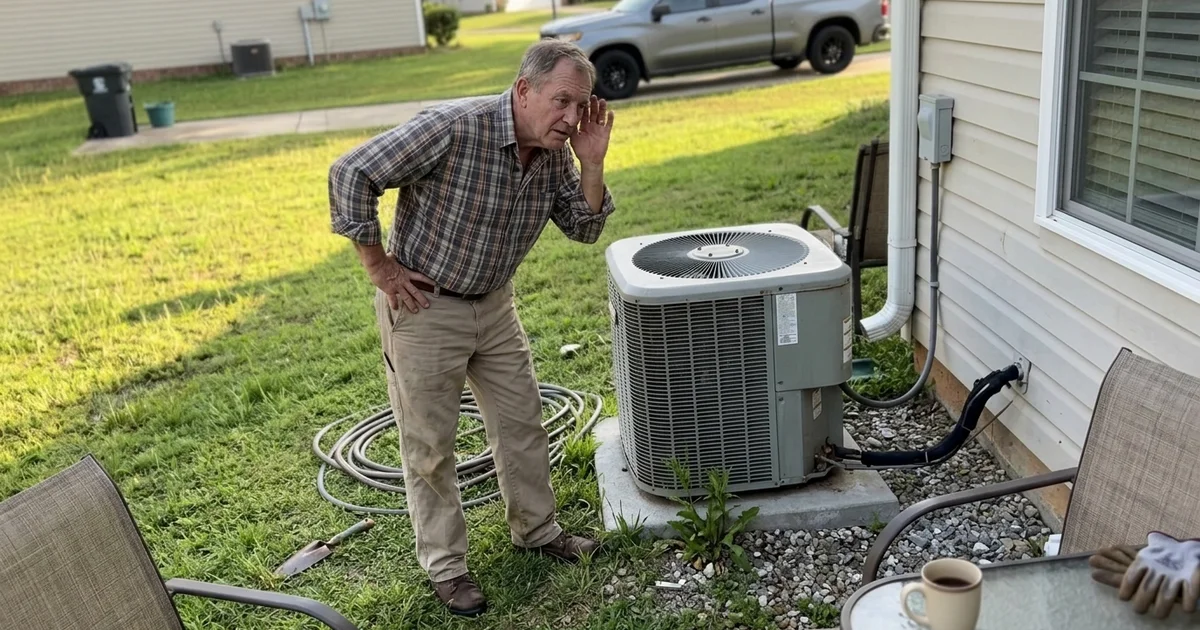
Matching the Noise to the Cause
Air conditioners make noise. What matters is whether the noise is new, and what kind it is. Most complaints fall into four categories, and each points somewhere fairly specific.
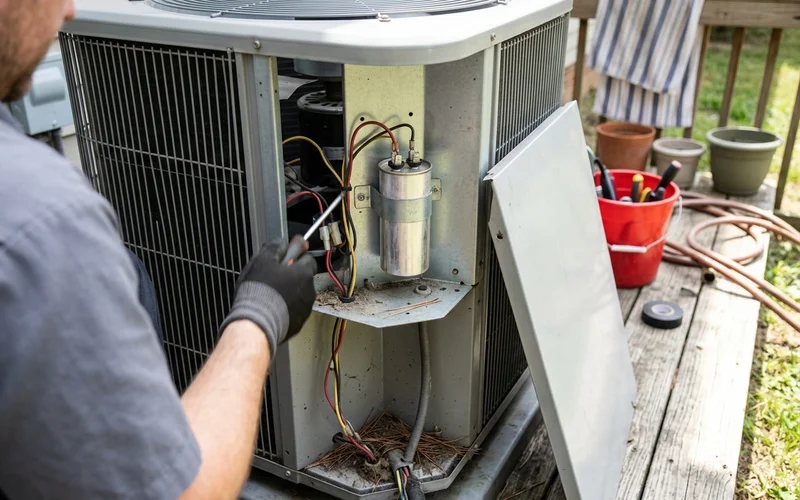
Buzzing. An electrical sound, usually from the outdoor unit. Points at a failing run capacitor or a chattering contactor. Often accompanied by a compressor that hums but will not start, or a fan that will not spin up.
Grinding or screeching. Mechanical, and the most urgent. A failing motor bearing in the condenser fan or blower, or metal contacting metal. Shut the system off.
Rattling or clanking. Loose hardware, debris inside the cabinet, or an unbalanced fan blade. Least urgent, but debris cuts fan blades and loose panels get worse.
Hissing or bubbling. Refrigerant related. A hiss can indicate a leak in the line set or coil; bubbling can suggest air or moisture in the refrigerant circuit. Both need a technician.
Urgency Ranking
If you only remember one thing, remember this ordering.
Shut it off immediately: grinding, screeching, or any loud metallic banging. These are mechanical failures in progress, and every additional minute of runtime does more damage.
Shut it off and call today: a buzz combined with a compressor that will not start, or a fan that will not turn. Repeatedly energizing a compressor that cannot start overheats the windings, which is how an inexpensive capacitor fault becomes a compressor replacement.
Keep running, but book a look: rattling with normal cooling, or a new hum that is louder than it was. Neither is an emergency, but both are telling you something has changed.
Address the safety case separately: a hissing or rotten-egg smell near a gas furnace is not an AC noise problem at all. Leave the house and call your gas provider from outside.
The expensive mistake
Letting a buzzing unit keep trying to start. The capacitor is one of the cheapest parts in the system. The compressor it protects is one of the most expensive.
What You Can Check Safely
Cut the power at the disconnect box beside the outdoor unit before touching anything, and then only do the obvious things. Look through the top grille for twigs, leaves, or gravel that have fallen in. Check that the service panel screws are tight, a loose panel vibrating against the cabinet produces a surprisingly dramatic rattle. Clear grass clippings and pine straw away from the coil.
That is the whole safe list. Do not open the electrical compartment, do not touch the capacitor, and do not try to free a stuck fan blade with the power on. Capacitors store enough charge to injure you well after the power is off, which is exactly why buzzing is a technician’s job even though the part itself is inexpensive.
Why Alabama Systems Get Noisy Sooner
Runtime again. A condenser fan motor that would see two thousand hours a year in a mild climate might see twice that here, and bearings fail on hours rather than years. The same applies to contactor contacts, which arc slightly on every start and pit over time, more starts, more pitting.
Storms contribute too. Voltage surges damage capacitors, and a capacitor that has been weakened rather than killed produces exactly the buzzing, slow-starting behavior described above for weeks before it fails completely.
And on the Gulf Coast, salt-air corrosion attacks fan motor housings, contactor surfaces, and the cabinet hardware itself, which is why coastal units rattle and buzz earlier in their lives than inland ones.
Whatever the sound, a licensed contractor can identify it in minutes. AC Repair gets you connected, with a free estimate before anything is replaced. If the noise is a buzz and you have already been told you need a compressor, read the capacitor vs compressor guide before agreeing to anything.