
Do These Four Things First
Before anyone visits for AC tune-up and maintenance, four homeowner tasks make the visit more useful and sometimes solve the problem outright.
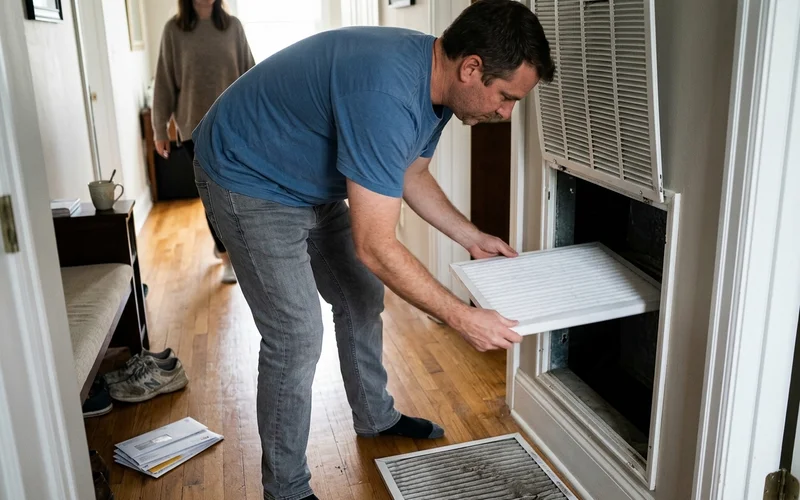
Replace the filter. After a winter of heating and a spring of pollen, it is due. If you cannot see light through it, it has been restricting airflow for a while.
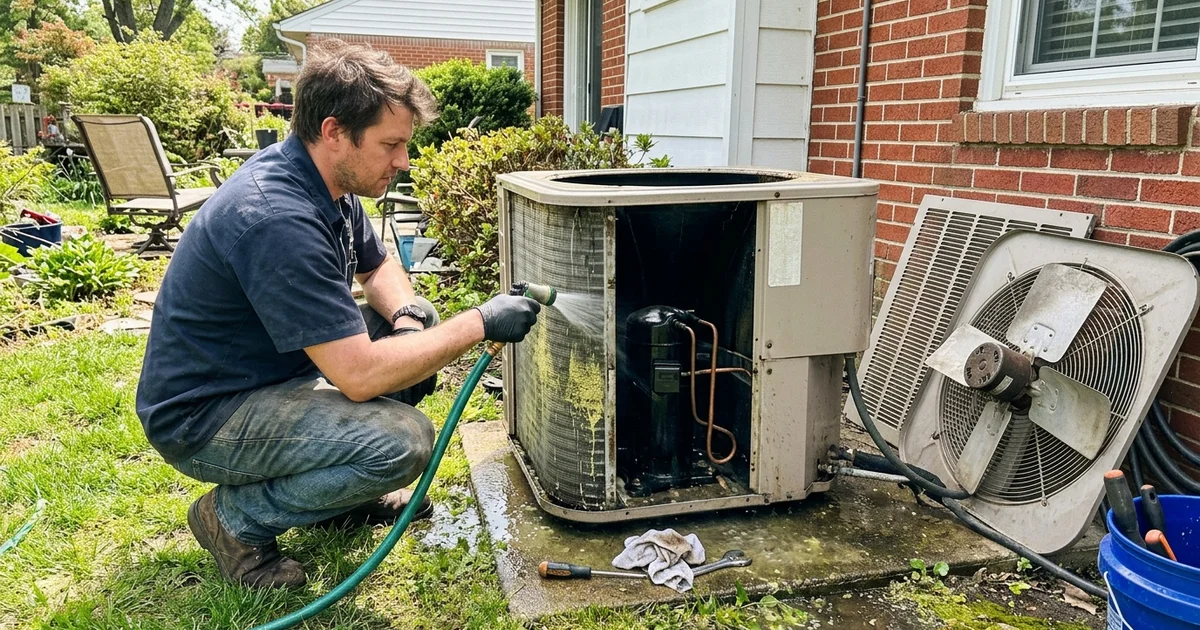
Clear the outdoor unit. Give it at least two feet on every side. Pull back shrubs, remove leaves and pine straw from the top grille, and clear grass clippings that have blown into the fins. Airflow across the condenser is half of how the system rejects heat.
Rinse the condenser coil. With the power off at the disconnect, spray the fins gently with a garden hose from the inside out if you can reach, or from the outside if not. No pressure washer, the fins bend easily.
Check registers and returns. Furniture in front of a return, or closed supply vents in unused rooms, restricts airflow across the whole system and causes problems that look like equipment faults.
What a Professional Tune-Up Covers
A proper visit is a measurement exercise, not a wipe-down. Here is what should be on the list.
Airflow. Filter condition, evaporator coil cleanliness, blower wheel condition, and static pressure across the system. A dirty blower wheel alone can cost a noticeable share of capacity.
Refrigerant. Suction and liquid pressures, superheat and subcooling. These numbers tell the technician whether the charge is correct, and a charge that has drifted low indicates a leak worth finding now rather than in August.
Electrical. Capacitor capacitance measured under load, contactor contact condition, tightness of every terminal, and amp draw on the compressor and both fan motors. This is where a tune-up most often prevents a mid-summer failure.
Water management. Condensate drain flushed, pan inspected for rust, float switch tested. Cheap to do now, expensive to skip.
Performance verification. A measured temperature split across the coil, typically in the high teens to low twenties in degrees Fahrenheit, confirms the system is actually delivering what it should rather than merely running.
The number to ask for
“What was the temperature split?” It is the simplest single indicator of whether your system is performing, and any technician doing the job properly will have measured it.
Why Timing Matters So Much Here
Alabama’s cooling season starts early and runs long. By late May, contractors across the state are running emergency no-cool calls, and a routine maintenance appointment becomes hard to schedule. In March, it is a phone call and a convenient slot.
The other timing argument is parts. A capacitor found to be reading low in spring is a planned replacement. The same capacitor failing on a Saturday afternoon in July is an emergency callout at premium rates, in a house that is already 88 degrees.
If you run a heat pump, consider two visits a year rather than one. A heat pump carries heating and cooling, so it accumulates far more operating hours than a cooling-only system, and the heating-side components, reversing valve, defrost board, aux heat, deserve their own check in the fall.
What Maintenance Prevents
Frozen coils, which almost always trace back to airflow or charge problems that a tune-up catches. Water damage from clogged drains. Compressor failures caused by running low on refrigerant or against restricted airflow for months. And the slow, invisible efficiency loss of dirty coils, which shows up on your power bill rather than as a fault.
That last one is worth emphasizing. A neglected system rarely announces itself. It just costs a little more every month until something breaks.
For the mechanism behind the most common preventable failure, read why AC coils freeze. To book a tune-up, AC Tune-Up & Maintenance connects you with a licensed local contractor, with a free estimate for anything found.