
The Threshold Question
Every homeowner facing a large repair quote asks the same thing before committing to AC installation and replacement: is it worth it? The most useful framing is not “can this be fixed”, almost anything can be fixed, but “what does each path cost me over the next five years?”
The common threshold is roughly half. When the repair in front of you costs about half what a new correctly sized system would, and the existing unit is past ten to fifteen years, replacement is usually the better financial decision. Below that threshold on a younger system, repair wins comfortably.
What makes this concrete is having both numbers at once. Ask the contractor on site for the repair estimate and a replacement quote in the same visit. Both are free and neither obliges you to anything, and the comparison is far easier with figures than with rules of thumb.
Signals That Push Toward Replacement
Repeat visits. One repair in five years is normal ownership. Three in one season is a system telling you something. Each individual repair may look reasonable; the pattern is the information.
Recurring refrigerant leaks. Refrigerant is not consumed, so a system needing a recharge every summer has a leak that is not being fixed. With R-410A prices rising through the phase-out, that habit gets more expensive each year.
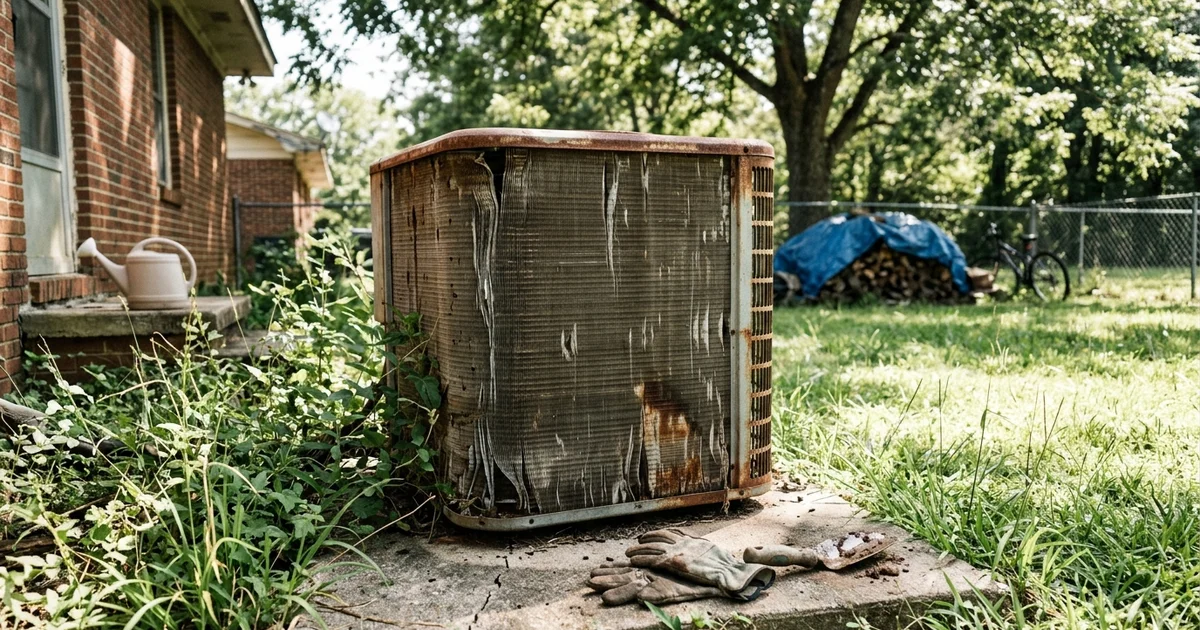
Corroded coils. Particularly relevant on the Gulf Coast. Once salt air has eaten the fins on a condenser coil, leaks recur no matter how carefully each one is repaired.
Declining comfort. The house takes longer to cool than it used to, humidity is worse, and the system runs almost continuously on hot afternoons. That is capacity loss, and it usually accompanies age.
Rising bills. A steady year-over-year climb with no change in habits or rates points at a system working harder for the same result.
Known oversizing. If your system short cycles and leaves the house clammy because it was sized wrong fifteen years ago, no repair fixes that. A correctly sized replacement does.
The five-year question
“If I spend this on the repair, how confident am I that I will not be spending again within two summers?” If the honest answer is “not very,” the replacement quote deserves a real look.
What Replacement Actually Buys You
Beyond ending the repair cycle, three things.
Efficiency, which matters more here than almost anywhere because of runtime. Replacing a fifteen-year-old system that has drifted below its original rating with a modern one can meaningfully change a summer power bill.
Humidity control, which is the underrated one. Two-stage and variable-speed equipment runs longer at lower capacity and pulls far more moisture out of Alabama air than old single-stage equipment cycling on and off. Homeowners often describe the difference as the house feeling “less heavy” rather than colder.
Correct sizing, if the original was wrong. A replacement is the only opportunity to fix a sizing mistake, and it is worth insisting on a Manual J load calculation rather than a like-for-like swap.
Timing It Deliberately
The worst time to make this decision is during a failure in July, when the house is unbearable and every option feels urgent. The best time is when the system is showing signals but still working, spring or fall, with time to get two quotes, check rebate eligibility, and think.
If you are reading this mid-failure, that ship has sailed, and the practical advice is: get both numbers, ask what warranty comes with each path, and if the replacement quote is large and unexpected, take an hour to get a second free opinion before committing.
The broader decision framework, including the factors that argue for keeping what you have, is in the repair vs replacement guide, and the AC replacement cost guide explains how the replacement number is built. For quotes on your home, AC Installation & Replacement connects you with a licensed local contractor.