
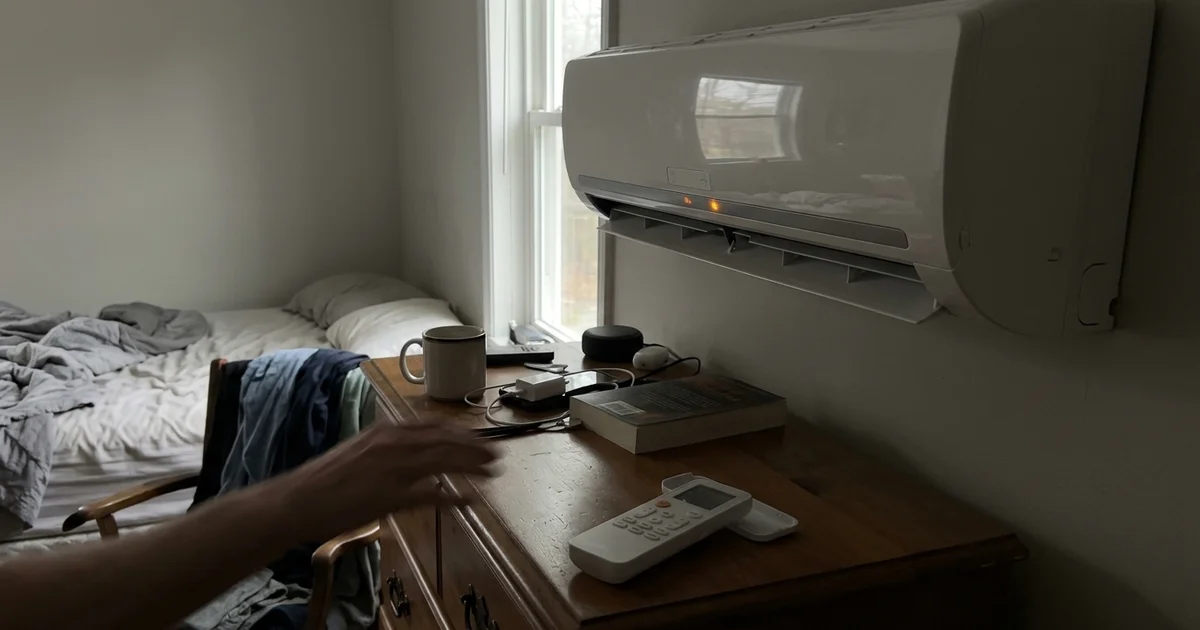
First, Capture the Information
Before you do anything else, write down what the unit is telling you. Count the blinks on the indoor head’s status light and note the rhythm, most brands use a pattern of long and short flashes. Check whether the remote or wall controller shows an alphanumeric code. Note the brand and model from the sticker on the indoor unit.
That information turns a vague “it’s not working” call into a diagnostic head start, and it often lets the contractor arrive with the right part on the truck.
The Four Fault Categories
Brands differ in their code schemes, but nearly every mini-split fault falls into one of four groups.
Sensor faults. Thermistors measuring room temperature, coil temperature, or outdoor ambient temperature have failed or drifted out of range. Usually straightforward to replace and among the less expensive repairs.
Communication faults. The indoor and outdoor units cannot talk to each other. Causes include damaged interconnecting wiring, corrosion or water ingress at a terminal block, a failed control board, or a loose connection. This category is disproportionately common in coastal Alabama, where salt air attacks outdoor connections.
Refrigerant and pressure faults. High or low pressure detected, which usually means a leak, a blockage, or a badly fouled coil. These need a licensed technician with gauges, without exception.
Electrical and compressor faults. Inverter board failures, compressor overcurrent, or supply voltage problems. The most serious category, and the one where equipment age matters most in deciding what to do next.
Notes on the two brands you will most likely have
Mitsubishi Electric systems commonly report through blink patterns on the indoor unit and letter-number codes on wired controllers. Daikin systems typically use two-character codes shown on the remote when you enter a diagnostic mode described in the manual. Both are widely serviced in Alabama.
What You Can Safely Do
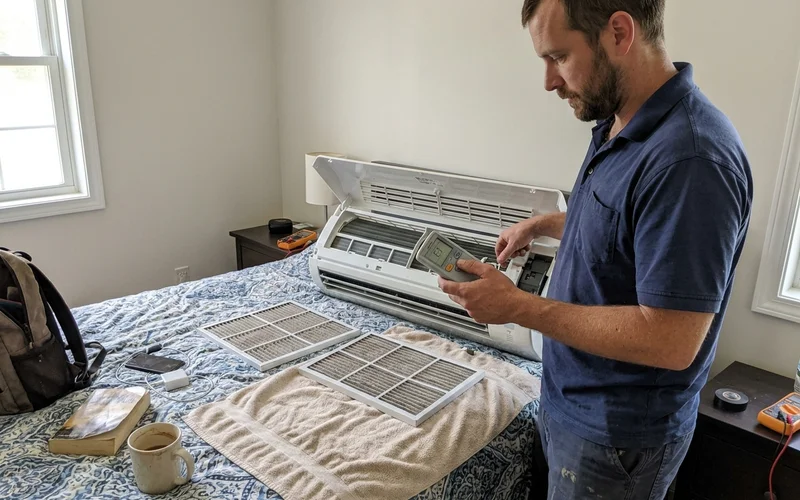
Three things. Wash the filters, mini-split heads have washable mesh filters that clog quickly, and a restricted filter can trigger temperature-related faults directly. Rinse them, dry them completely, and reinstall.
Clear the outdoor unit of leaves, grass, and anything stacked against it, since airflow restriction produces pressure faults.
Then power cycle: off at the breaker for five minutes, back on. Transient faults from a power blip or a momentary sensor glitch often clear this way.
If the code returns, stop. Do not open the indoor head or the outdoor cabinet. Mini-splits contain inverter boards with stored charge, and the refrigerant circuit is not homeowner territory.
When to Call
Call if the same code returns after a reset, if the code sits in the refrigerant or compressor category, if the unit is not cooling or heating regardless of what the light says, or if you see water dripping from the indoor head.
That last one deserves a mention because it is common and easy to misread as an error-code problem. Water from the front of the head usually means a blocked condensate line or a failed lift pump, not an electronic fault. Turn the unit off to protect the wall and floor, and get it cleared.
A technician diagnosing a mini-split will read the fault history from the board, test the sensors, check the interconnecting wiring and terminals, measure refrigerant pressures, and inspect the coil and blower wheel. In humid Alabama, blower wheel fouling inside the head is a frequent contributor to poor performance that no error code specifically reports.
Ductless Mini-Split Service connects you with a licensed local contractor who works ductless systems, with a free, no-obligation estimate before any repair. If the diagnosis points at the equipment rather than a setting, the mini-split installation cost guide covers what replacing or adding a system involves here.