
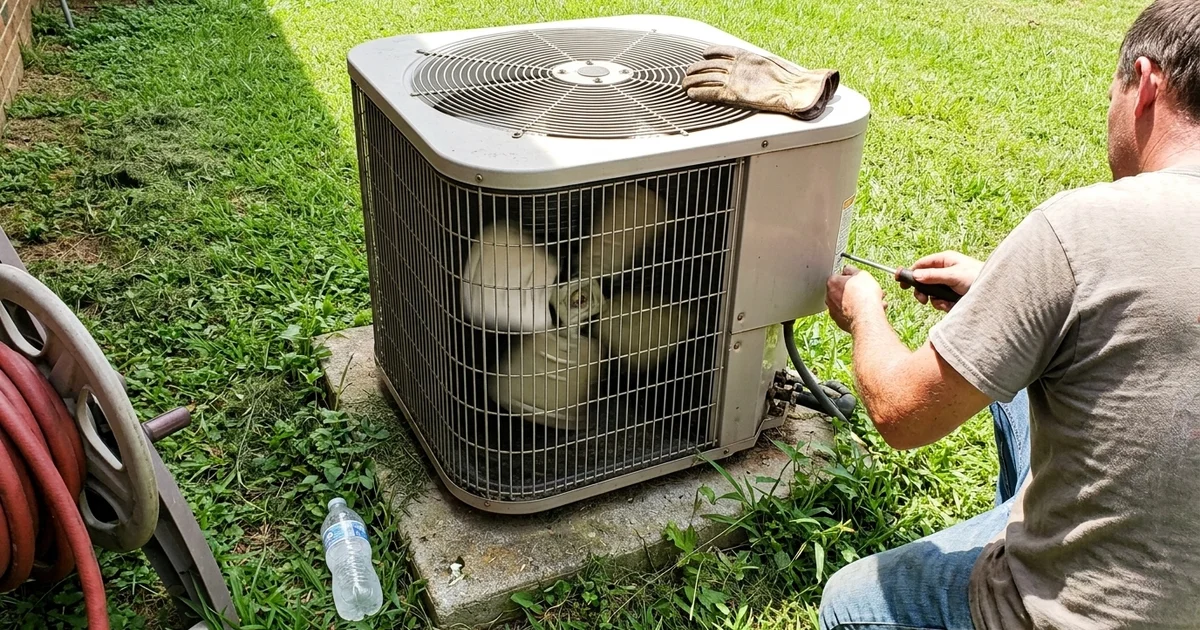
What Short Cycling Looks Like
A healthy air conditioner runs in cycles of roughly ten to twenty minutes, longer on brutal afternoons. Short cycling is when those cycles collapse to a few minutes, repeating all day. The house may still cool, at least roughly, which is why plenty of homeowners live with it for a season before calling anyone.
That is the problem: it is easy to ignore and expensive to ignore. Compressors draw their highest current in the first seconds of a start. A system doing six starts an hour instead of two is generating three times the startup heat and wear on the single most expensive part in your system, while your power bill quietly climbs.
The Five Common Causes
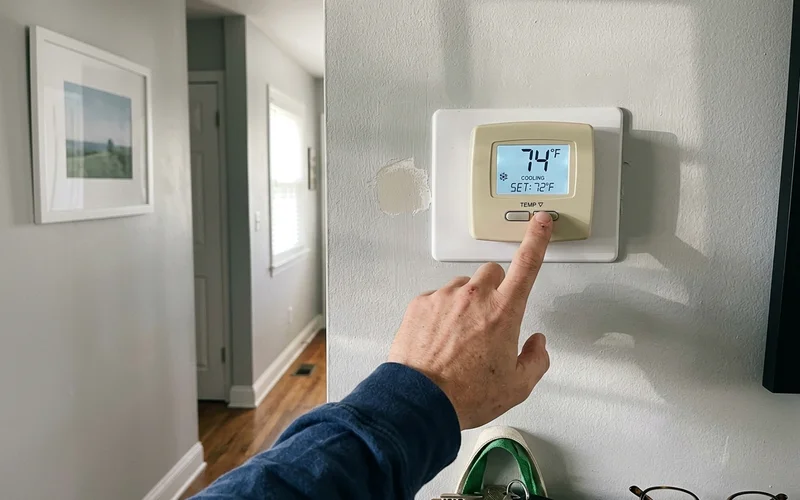
Oversized equipment. The most stubborn cause, because no repair fixes it. A system with more capacity than the house needs satisfies the thermostat quickly and shuts down. In a humid climate that also means the air never gets properly dried, so the house feels clammy at 74 degrees.
Restricted airflow. A clogged filter, a dirty evaporator coil, closed registers, or crushed duct. Less airflow means the coil runs colder, safety limits trip, or the coil ices up and interrupts the cycle.
Low refrigerant. A leak lowers pressure, which can trip a low-pressure safety switch. The system stops, pressure equalizes, it restarts, and the cycle repeats. Usually accompanied by weak cooling.
Thermostat problems. A thermostat in direct sun, above a lamp, or on a wall with a draft reads the wrong temperature and cycles the system incorrectly. Failing thermostats also do this on their own.
Electrical faults. A weak capacitor or a pitted contactor can cause the compressor to start, struggle, and drop out on its internal overload protection, then try again a few minutes later.
Quick self-test
Time three cycles. If the system runs less than about five minutes each time and the house is not already at temperature, you have short cycling rather than a system that is simply keeping up easily.
What to Check, and What Needs a Pro
Change the filter and see what happens over the next two days. Open any closed registers and pull furniture away from returns. Check that your thermostat is not sitting in afternoon sun or next to a heat source, and that its batteries are fresh.
Everything else is technician territory. Refrigerant pressures, safety switch behavior, capacitor testing, and airflow measurement all require instruments. Importantly, a technician can also tell you whether your system is oversized by comparing its capacity against a load calculation for your home. That is worth knowing before you replace anything, because installing another oversized unit repeats the problem for another fifteen years.
AC Repair connects you with a licensed local contractor who can measure all of that in one visit, with a free estimate before any work.
The Alabama Angle
Oversizing is disproportionately common here, and it happens for an understandable reason. Faced with a climate where systems run for five months, installers and homeowners both feel safer going a size up. In practice that trade hurts: bigger equipment cools faster but dehumidifies worse, and humidity control is exactly what an Alabama home needs.
The symptom homeowners describe is telling. “It cools, but the house feels damp.” That is short cycling and poor moisture removal in the same sentence, and the fix is usually correct sizing on the next replacement plus, in some cases, a whole-home dehumidifier to handle moisture independently of temperature.
Filter neglect is the other big local contributor. Pollen loads in spring and five months of continuous runtime clog filters faster than the box’s suggested interval, and airflow restriction is behind a large share of cycling complaints. The filter change guide covers realistic intervals for this climate, and if the restriction has gone far enough the frozen AC coil guide covers what happens next.