
If You Smell Gas Right Now
Stop reading and do this.
- Get everyone out. People and pets, out of the building, immediately.
- Touch nothing electrical. No light switches, no thermostat, no garage door opener, no phone inside. A spark is the thing you are avoiding.
- Do not light anything. No matches, no lighters, no candles.
- Leave doors open behind you if it is easy, but do not delay getting out.
- From outside and away from the building, call your gas provider’s emergency line or 911.
- Stay out until the gas provider says it is safe to return.
That sequence is the whole priority list. Everything else in this guide is for after the property is confirmed safe.
Why That Smell Exists
Natural gas has no odor of its own. Utilities add mercaptan, a sulfur compound, specifically so leaks announce themselves. That rotten-egg smell is a deliberate safety feature working exactly as designed.
Which means: never dismiss it. Not as “probably nothing,” not as “it might be the drains.” The smell exists to be acted on.
Two other signs are worth knowing. A hissing sound near a gas line or appliance can indicate a leak. And dead or discolored vegetation in a line running across your yard, with no other explanation, can indicate an underground leak.
Also treat a CO alarm as an evacuation
Carbon monoxide is odorless and separate from a gas leak. If a CO alarm sounds, get everyone out and call 911 from outside. Symptoms such as headache, dizziness, nausea, confusion, or several people feeling unwell at once are reason enough to leave even without an alarm.
Who Handles What in Alabama
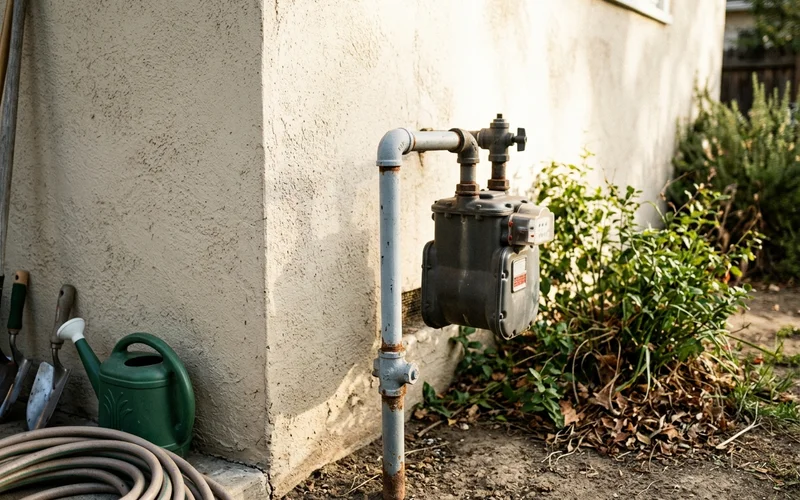
The gas provider owns the leak. Spire serves much of Alabama, and municipal or regional providers serve other areas. Their emergency line is on your bill and on the meter. They locate the leak, shut off supply if needed, and confirm when it is safe to reoccupy.
911 is appropriate if you are unsure, if anyone feels unwell, or if you cannot reach the provider quickly.
A licensed HVAC contractor handles the furnace itself, once the property is safe and if the appliance turns out to be the source. Gas valves, connections, heat exchangers, and combustion issues are their work.
That order is not negotiable. An HVAC contractor is not the right first call for an active leak.
After the All-Clear
If the gas provider traced the smell to your furnace, do not put it back into service until a licensed technician has inspected it. What they check: the gas valve and its connections, the burner assembly, the heat exchanger for cracks, the flue and venting, and the combustion characteristics of the unit.
A cracked heat exchanger deserves specific mention. It is the barrier between combustion gases and the air circulating through your house. When it cracks, combustion products including carbon monoxide can enter the airstream. No reputable contractor will return a furnace with a cracked exchanger to service, and it is the one furnace fault where replacement rather than repair is usually the honest answer.
Annual pre-winter furnace inspection is the practical prevention here, particularly for equipment that sits idle eight months a year. Furnace Repair connects you with a licensed local contractor for that inspection or for a post-incident check.
If your furnace simply will not light and there is no gas smell, the furnace not igniting guide covers the likely causes.