
Where Your Cooling Is Going
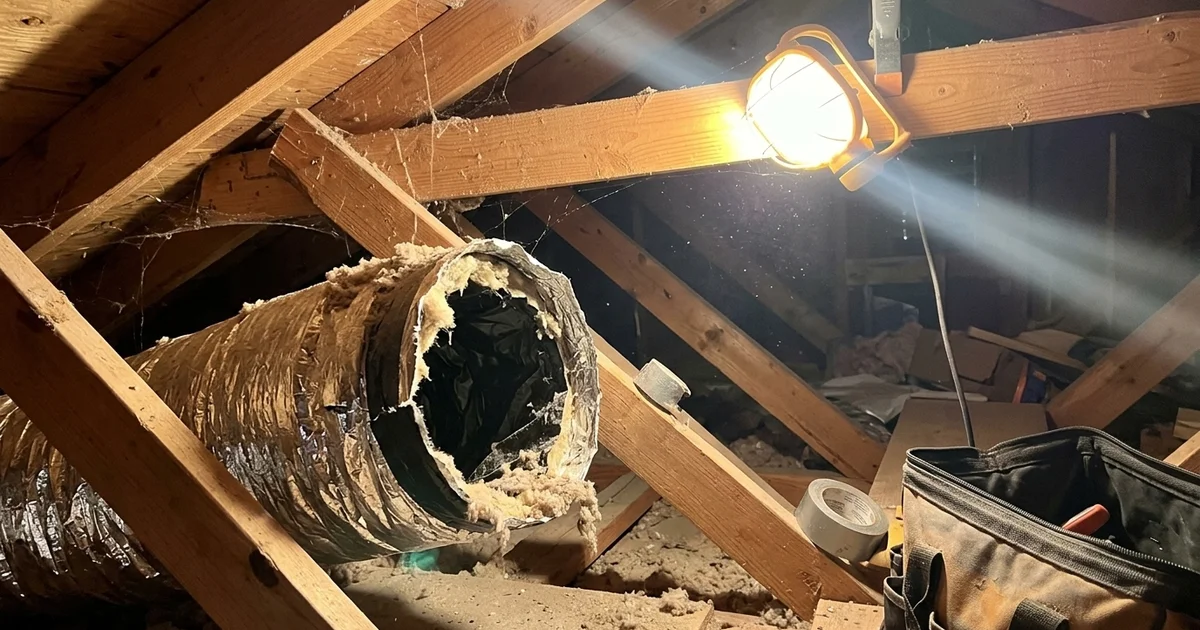
Most Alabama homes run supply and return ductwork through the attic, which is why ducts, thermostats and indoor air quality work pays back so quickly here. In July, that attic sits between 120 and 140 degrees. Every disconnected joint, crushed flex run, and unsealed boot is either dumping cooled air into that space or pulling superheated air into your return.
That is why duct leakage costs more here than in most of the country. A leak in a conditioned basement wastes air into a space you are partly conditioning anyway. A leak in an Alabama attic is a straight loss, and it works against you twice: you paid to cool that air, and the system now has to work harder to make up for what it lost.
The Signs Worth Reading
One or two rooms that never keep up. Usually the ones farthest from the air handler, or served by a run that has come loose. If a room has been the “hot room” for years and nobody could explain it, ductwork is the first suspect.
Rising bills with no change in habits. Not a sudden jump, which usually points at equipment, but a steady year-over-year creep.
Dusty air and dirty registers. Leaky returns pull attic air, insulation fibers, and dust directly into the system and blow them through your house.
Continuous runtime. A system that essentially never shuts off on a hot afternoon may be perfectly healthy but losing a large share of its output before it reaches a register.
Rooms that feel humid. Leaky returns pull hot, humid attic air into the system, adding moisture load the equipment then has to remove.
The attic check
If you can safely get into your attic, look along the duct runs for sections hanging loose, boots not sealed to the ceiling, and flex duct pinched by stored boxes. You will often find at least one obvious problem without any instruments.
How It Gets Fixed
Mechanical repair first. Disconnected runs get reattached, crushed sections get replaced, and boots get resecured to the ceiling. No sealing product substitutes for a duct that has simply come apart.
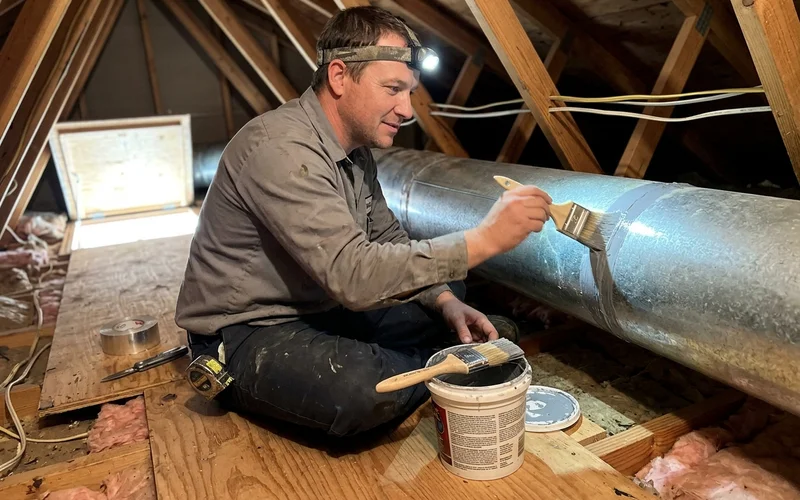
Mastic on joints. A brushed-on sealant that stays flexible and lasts. It is the standard for accessible connections, and it substantially outperforms cloth duct tape, which dries out and fails in attic heat within a year or two.
Aerosolized sealing for systems where the leaks are numerous and inaccessible. The system is pressurized and a sealant aerosol is introduced, which builds up at leak points from the inside. More expensive, and useful when opening up ceilings is not practical.
Insulation. Sealed duct running through a 130-degree attic still gains heat. Adequate duct insulation matters here as much as sealing does.
Measuring, Then Fixing
A contractor should measure before quoting: static pressure across the system, airflow at registers, and often a pressure test of the duct system itself. That establishes both the size of the problem and whether the work actually improved it afterward.
This matters because “your ducts are leaky” is a claim that is easy to make and hard to verify without numbers. Ask what was measured and what the target is.
Duct condition also interacts with everything else. A high-efficiency system feeding leaky duct delivers a fraction of what you paid for, which is why duct assessment is worth doing before spending heavily on equipment efficiency.
For the control side of comfort, the smart thermostat guide covers what those actually save. For duct assessment and sealing, Ducts, Thermostats & Indoor Air Quality connects you with a licensed local contractor for a free, no-obligation estimate.