
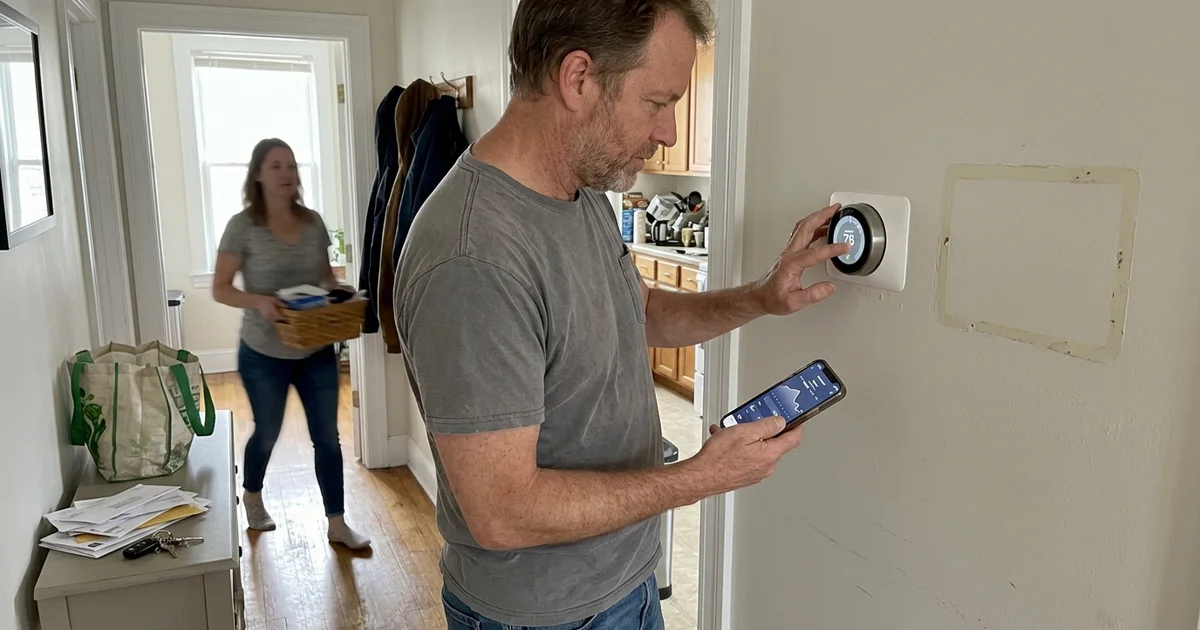
What a Smart Thermostat Actually Changes
The value is not in the touchscreen. It is in three things: scheduling that matches how you actually use the house, remote control so you can adjust from your phone rather than coming home to a hot house, and runtime data that tells you when your system starts working harder than it used to. Getting all three requires the thermostat to be wired and configured correctly, which is where ducts, thermostats and indoor air quality work comes in.
That last one is underrated. A thermostat that logs how many hours your system ran each day gives you an early warning of a developing problem, weeks before it becomes a failure.
The Heat Pump Caveat
This is the part Alabama homeowners need to get right, because most homes here heat with a heat pump.
A heat pump thermostat has to manage two heat sources: the heat pump itself, and the electric auxiliary strips that back it up. Those strips cost several times more to run. A thermostat that calls them too readily, during recovery from a setback, or whenever the room is more than a degree or two below setpoint, will increase your winter bill while advertising energy savings.
Before buying, confirm three things: that the model explicitly supports heat pumps with auxiliary and emergency heat, that it supports your specific configuration if you have a dual-fuel system with a gas furnace, and that it has an adjustable or intelligent recovery function rather than brute-forcing setpoint changes.
The setting to check after installation
How aggressively the thermostat calls aux heat, and whether recovery is gradual. Getting this wrong is the single most common way a smart thermostat costs money in Alabama.
Installation Basics
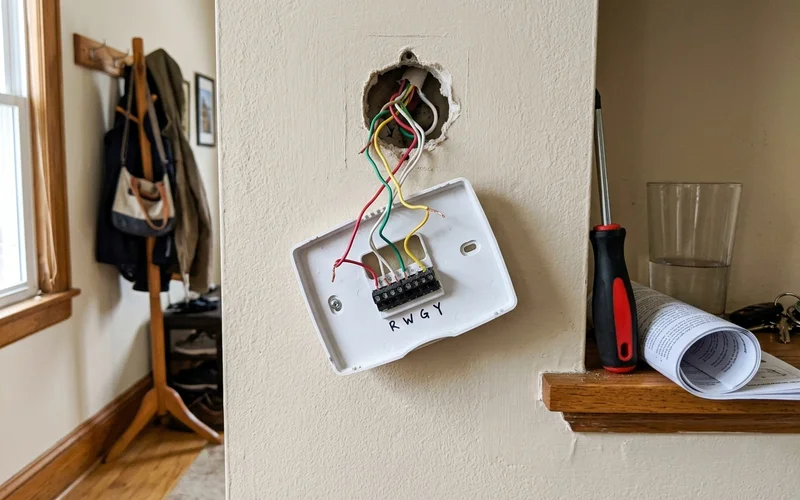
Most smart thermostats need a C wire for continuous power. Newer homes generally have one. Older Alabama homes frequently do not, and the options are running a new wire from the air handler, using a power-extender adapter at the equipment, or picking a model designed to work without one.
Beyond power, the wiring itself is not complicated in principle: each labeled terminal on the old thermostat maps to the same label on the new one. In practice, heat pump systems have more terminals and more room for error, and a miswired thermostat can leave you running aux heat continuously without realizing it.
Photograph the old wiring before disconnecting anything. If your system is a heat pump, dual-fuel, or has any zoning, having a contractor do the install and configuration is money well spent.
Placement matters too. A thermostat in direct sun, above a lamp or television, near a supply register, or on an exterior wall reads the wrong temperature and controls the system badly no matter how smart it is.
Realistic Savings in This Climate
Where savings actually come from in Alabama: away modes during a five-month cooling season, since an empty house cooled to 72 all day is pure waste. Scheduling that lets the house drift up a few degrees when nobody is home. Avoiding the manual thermostat-cranking habit, where someone sets it to 65 to “cool faster,” which does nothing except run the system longer.
Where they do not come from: deep overnight setbacks in winter, which trigger aux heat, and expecting a thermostat to compensate for leaky ducts or an undersized system. If your ducts leak, fix that first, the leaky ducts guide explains why.
For installation, configuration, or a compatibility check on a heat pump system, Ducts, Thermostats & Indoor Air Quality connects you with a licensed local contractor, with a free estimate before any work.